
The Great Ocean Misconception
When most people think about unexplored frontiers, their minds drift toward distant galaxies and red planetary landscapes. This cosmic fixation has created one of science’s most persistent misconceptions: that we know more about our oceans than we do about outer space. The reality tells a starkly different story. We have detailed maps of Mars and can track asteroids millions of miles away, but a staggering eighty percent of Earth’s oceans remain unexplored and unmapped at any meaningful resolution.
This misconception sticks around because space exploration captures public imagination in ways that ocean science often doesn’t. Rocket launches make headlines. Deep-sea expeditions, despite their equally mind-blowing discoveries, rarely get the same excitement. Yet the depths of our planet hold mysteries that would make any science fiction writer envious, and the technological challenges of exploring them rival anything NASA has attempted.
The Deep Sea Discovery Revolution
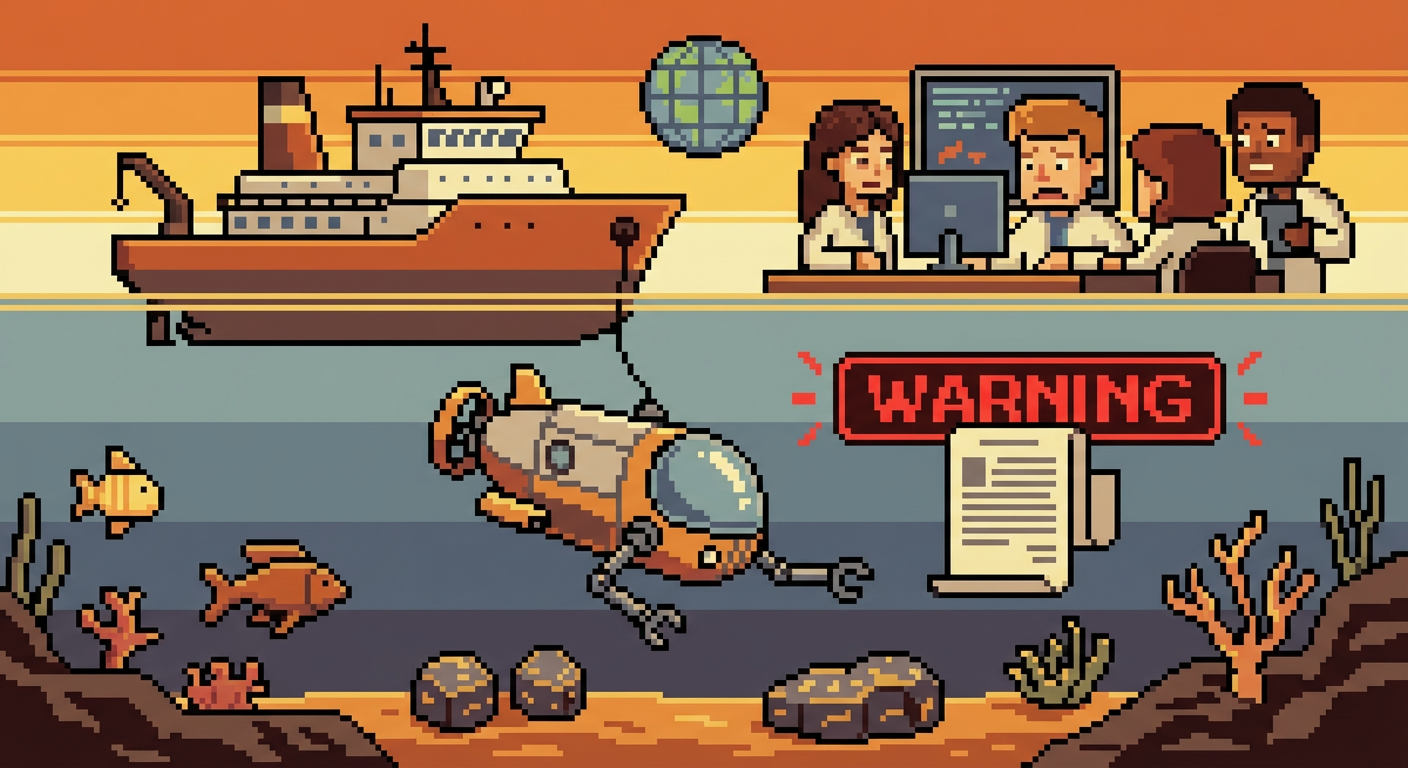
Recent advances in ocean exploration technology are revealing just how much we’ve been missing. Autonomous underwater vehicles have completely changed both the speed and cost-effectiveness of deep-sea research, allowing scientists to probe regions that were previously inaccessible or prohibitively expensive to study. These robotic explorers work tirelessly in crushing depths and total darkness, gathering data that would have taken decades to collect using traditional methods.
The discoveries coming from these expeditions are nothing short of extraordinary. Marine biologists now identify approximately two thousand new species each year from deep ocean surveys alone. This rate of discovery suggests that millions of unknown organisms live in the deep sea. We’re talking about biodiversity on a scale that challenges our understanding of life on Earth. From bioluminescent jellyfish with completely novel light-producing mechanisms to bacteria thriving in conditions once thought uninhabitable, each expedition rewrites textbooks.
Organizations like MBARI ocean research have pioneered many of these technological advances, developing sophisticated instruments that can withstand the immense pressures of the deep ocean while transmitting real-time data to surface researchers. Their work shows how engineering innovation and biological discovery go hand in hand in modern ocean science.
Environmental Pressures in the Abyss
New species discoveries grab headlines, but ocean scientists are increasingly worried about disturbing trends emerging from their data. Ocean acidification is happening at the fastest rate documented in three hundred million years, according to paleoclimate records that extend far beyond human history. This chemical transformation of seawater affects everything from microscopic plankton to massive coral reef systems, creating cascading effects throughout marine food webs.
Even more shocking to researchers has been finding human-made pollution in the planet’s most remote locations. Surveys conducted since 2019 have documented plastic debris in the Mariana Trench at depths exceeding eleven kilometers. That proves human influence has reached literally every corner of the ocean. These findings shatter the illusion that the deep sea is an untouched wilderness, revealing instead an ecosystem already shaped by human activity.
The NOAA Ocean Service has been instrumental in documenting these environmental changes, providing crucial data that helps scientists understand both natural ocean processes and human impacts on marine ecosystems.
The Deep Sea Mining Dilemma
As terrestrial mineral resources become increasingly scarce and expensive to extract, attention has turned toward the mineral wealth of the deep ocean floor. Proposals for deep-sea mining operations have multiplied in recent years, targeting rare earth elements and metals essential for renewable energy technologies. But these plans have raised significant alarm among marine biologists worldwide, who warn that mining operations could devastate ecosystems we’re only beginning to understand.
The timing of this industrial interest couldn’t be worse from a scientific perspective. Just as autonomous vehicles and advanced sensors are revealing the extraordinary biodiversity and complexity of deep-sea ecosystems, commercial interests are pushing to exploit these same environments. Many newly discovered species haven’t even been formally described by taxonomists, yet their habitats may soon face destruction from mining equipment.
This tension between scientific discovery and commercial exploitation highlights a fundamental challenge in ocean policy. How can we make informed decisions about resource use in environments we’ve barely begun to study? The question becomes even more complex when you consider that some proposed mining targets could provide materials crucial for climate change mitigation technologies.
What’s Next for Ocean Discovery
The next decade promises to be transformative for ocean science. Technological advances continue to push the boundaries of what’s possible in deep-sea exploration, with new instruments capable of operating at greater depths for longer periods while collecting increasingly sophisticated data. Artificial intelligence and machine learning are beginning to help researchers process the vast amounts of information generated by these expeditions, identifying patterns and anomalies that human researchers might miss.
Perhaps most importantly, the ocean science community is working to bridge the gap between discovery and public understanding. The same misconceptions that make people believe we know more about space than our oceans also limit public support for marine research funding. By making ocean discoveries more accessible and engaging, scientists hope to generate the same enthusiasm for deep-sea exploration that currently exists for space missions.
The ocean’s hidden reality deserves our attention not just for its scientific value, but for its profound implications for understanding our planet’s past, present, and future. Whether you’re curious about the latest species discoveries, concerned about environmental changes, or fascinated by cutting-edge exploration technology, there’s never been a more exciting time to dive into ocean science and discover what lies beneath the surface of our misconceptions.