
The Impossible Mathematics of Consciousness
Picture this: your brain contains roughly 86 billion neurons, each one connected to thousands of others through an estimated 100 trillion synapses. Now imagine trying to recreate that biological masterpiece using traditional computer chips. The numbers alone should make any engineer break into a cold sweat. A single high-end graphics processor today might house 80 billion transistors, which sounds impressive until you realize that’s barely matching the neuron count, let alone the synaptic connections that actually do the computational heavy lifting.
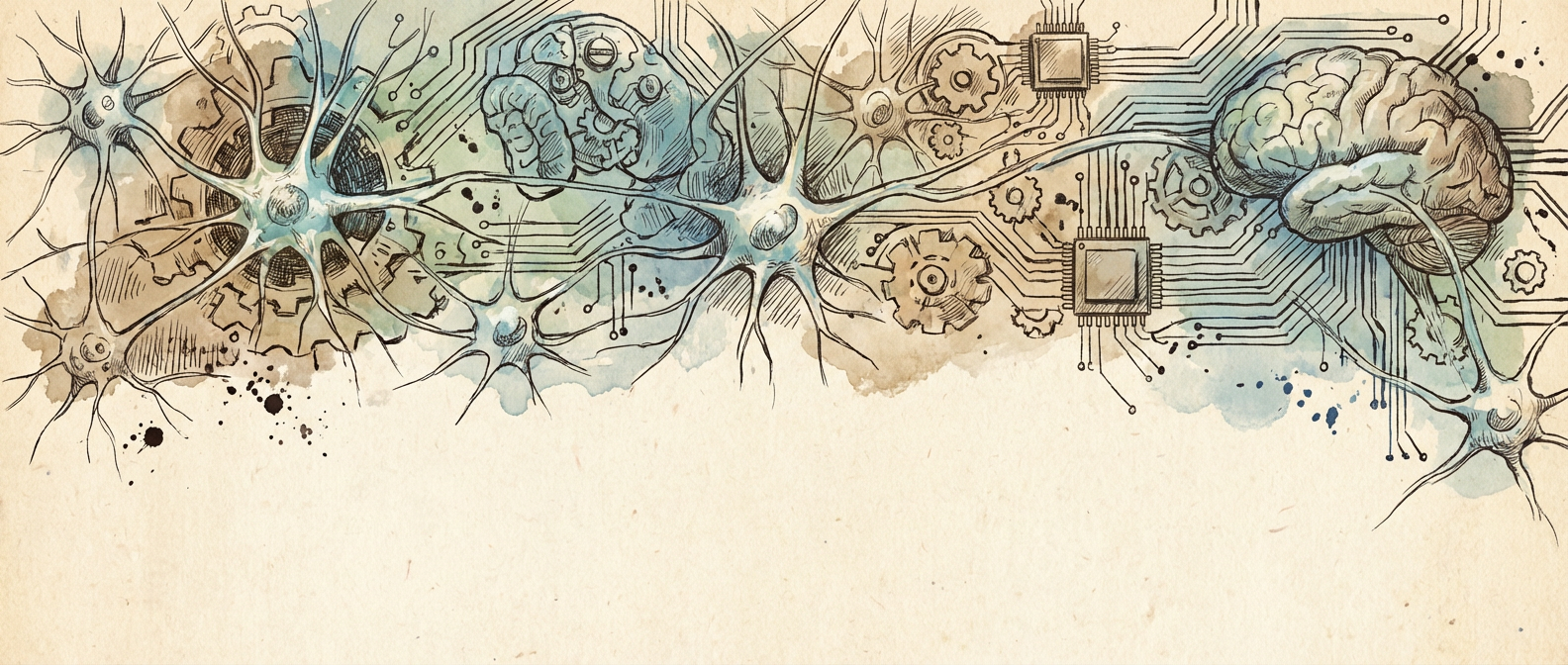
This is the scale problem that keeps neuromorphic engineers awake at night, and frankly, it should. Traditional computing works by shuttling data between separate memory and processing units millions of times per second. Your brain, meanwhile, processes and stores information in the same physical structures, achieving computational feats that would require server farms while sipping the energy equivalent of a dim light bulb. The gulf between silicon and synapse isn’t just technological. It’s a chasm of architectural philosophy that spans seven orders of magnitude in energy efficiency.
But here’s where things get complex. Recent advances in neuromorphic chip design aren’t just throwing more transistors at the problem. Intel’s Loihi chip packs 131,072 artificial neurons with 130 million synapses onto a single piece of silicon smaller than your thumbnail. IBM’s TrueNorth manages a million neurons with 256 million synapses. These aren’t just impressive numbers. They represent a fundamental rethinking of how computation itself might work.

The Elephant in the Clean Room
When researchers talk about scaling neuromorphic architectures, they’re wrestling with what I call the elephant problem. Imagine you’re an ant trying to build an elephant. You could start by making bigger ants, but eventually you’d discover that elephant-sized ants would collapse under their own weight. Their legs couldn’t support their mass, their breathing systems would fail, their circulation would break down. Biology solved this by evolving entirely different architectures for different scales.
The same principle haunts neuromorphic computing. Simply cramming more artificial synapses onto a chip eventually hits fundamental physical limits. Heat dissipation becomes a nightmare. Signal propagation delays start dominating computation time. Manufacturing yields plummet as feature sizes shrink beyond reliable fabrication thresholds. These aren’t engineering hiccups to be optimized away. They’re fundamental constraints that demand architectural innovation.
Consider the latest work coming out of Stanford’s neuromorphic group. They’re exploring 3D chip architectures that stack processing layers vertically, mimicking the laminar structure of cortical columns. Initial results suggest this approach could pack neural networks ten times denser than conventional 2D layouts while actually reducing power consumption. Sometimes scaling up requires building out instead of just building bigger.
The Memory Wall Becomes the Synaptic Canyon
Traditional computers suffer from what’s known as the memory wall, the growing gap between processor speed and memory access time that throttles overall performance. In neuromorphic systems, this becomes something far more dramatic: the synaptic canyon. Real neurons don’t distinguish between processing and memory the way our computers do. Every synaptic connection simultaneously stores information about past experiences and actively participates in current computations.
Bridging this canyon requires rethinking the fundamental building blocks of computation. Memristors, devices that remember their electrical history, offer one promising path forward. These components can simultaneously store synaptic weights and perform the multiplication operations central to neural computation. A single memristor crossbar array can theoretically implement thousands of synaptic connections in the space a traditional processor would need for just the control circuitry.
But the scale issues here are staggering. A human brain-scale neuromorphic computer would need roughly 100 trillion memristive connections, each one precisely programmable and stable over decades of operation. Current memristor technology achieves perhaps 1,000 reliable switching cycles before degradation sets in. The gap between laboratory demonstrations and practical deployment spans roughly eight orders of magnitude, a chasm that makes the early days of silicon computing look like a gentle slope.
When Networks Think in Time
Perhaps the most fascinating aspect of the scale problem involves temporal dynamics. Your neurons don’t just process information, they process information in time. Signals propagate through biological neural networks as waves of electrical activity, creating complex spatiotemporal patterns that encode everything from visual recognition to motor control. Capturing these dynamics at scale requires neuromorphic architectures that can handle millions of precisely timed events simultaneously.
This is where the scale problem becomes almost philosophically interesting. Traditional computers handle timing through global clock signals that synchronize all operations. Scale that approach to brain-like architectures and you’d need clock distribution networks spanning thousands of processing cores, each handling millions of artificial synapses. The power required just for timing coordination would exceed the total energy budget of biological brains by several orders of magnitude.
Asynchronous neuromorphic architectures sidestep this problem entirely. Events propagate through the network only when neurons actually spike, eliminating the need for global synchronization. Qualcomm’s experimental chips use this approach, achieving power consumption that scales almost linearly with computational activity rather than total network size. Early results suggest these architectures might actually become more efficient as they grow larger, a scaling relationship that would make biological evolution proud.
The Beautiful Impossibility of Perfect Replication
Here’s the dirty secret of neuromorphic computing: we probably don’t want to replicate brains exactly. Biological neural networks evolved under constraints that don’t apply to silicon. Energy scarcity, chemical signaling limitations, evolutionary compromise, and the fundamental messiness of organic chemistry all shaped how our brains work. Artificial neural architectures have the luxury of learning from biology while transcending its limitations.
The most promising neuromorphic designs embrace this freedom. They use digital precision where biology relies on noisy analog signals. They implement learning algorithms that would be impossible with biological constraints. They scale to architectures that no evolutionary process could reach through gradual modification. The scale problem isn’t just about building bigger brain-like computers. It’s about discovering what kinds of intelligence become possible when we free ourselves from biological blueprints.
Current neuromorphic research sits at one of those fascinating inflection points where laboratory curiosity meets practical necessity. The energy demands of artificial intelligence are growing exponentially just as traditional computing approaches are hitting physical limits. The solutions emerging from neuromorphic research labs might not just enable brain-scale computing. They might fundamentally reshape our understanding of what computation can become when it operates more like thinking than calculating.
The next few years promise revelations that will make today’s most ambitious neuromorphic architectures look quaint. If you want to follow along with this unfolding revolution, keep an eye on the International Conference on Neuromorphic Systems and the latest publications from groups at IBM Research, Intel Labs, and the neuromorphic startups spinning out of major universities. The scale problem isn’t just an engineering problem. It’s an invitation to reimagine the very foundations of artificial intelligence.