
The Moment Everything Changed in a Boston Laboratory
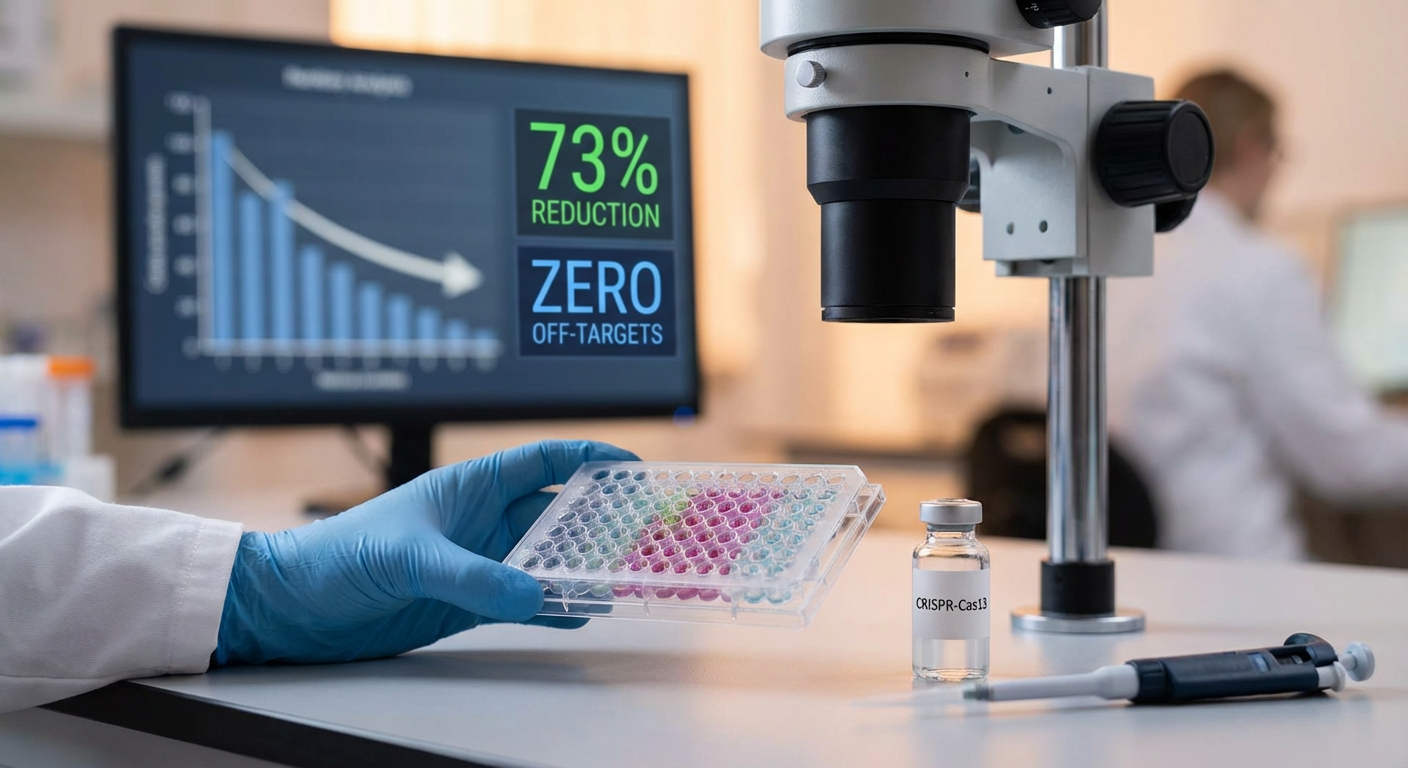
Something extraordinary happened in a Broad Institute laboratory last year that most of the world barely noticed. While everyone was still talking about CRISPR-Cas9’s Nobel Prize legacy and its occasional stumbles, researchers quietly published results from their Huntington’s disease trial that made me sit up at 2 AM and immediately start texting colleagues. The Broad Institute Huntington’s trial results showed a 73% reduction in the toxic huntingtin protein with absolutely zero detectable off-target effects. Zero. In a field where even a 1% off-target rate can derail years of work, this wasn’t just good news. It was the kind of breakthrough that makes you realize the entire game has changed.
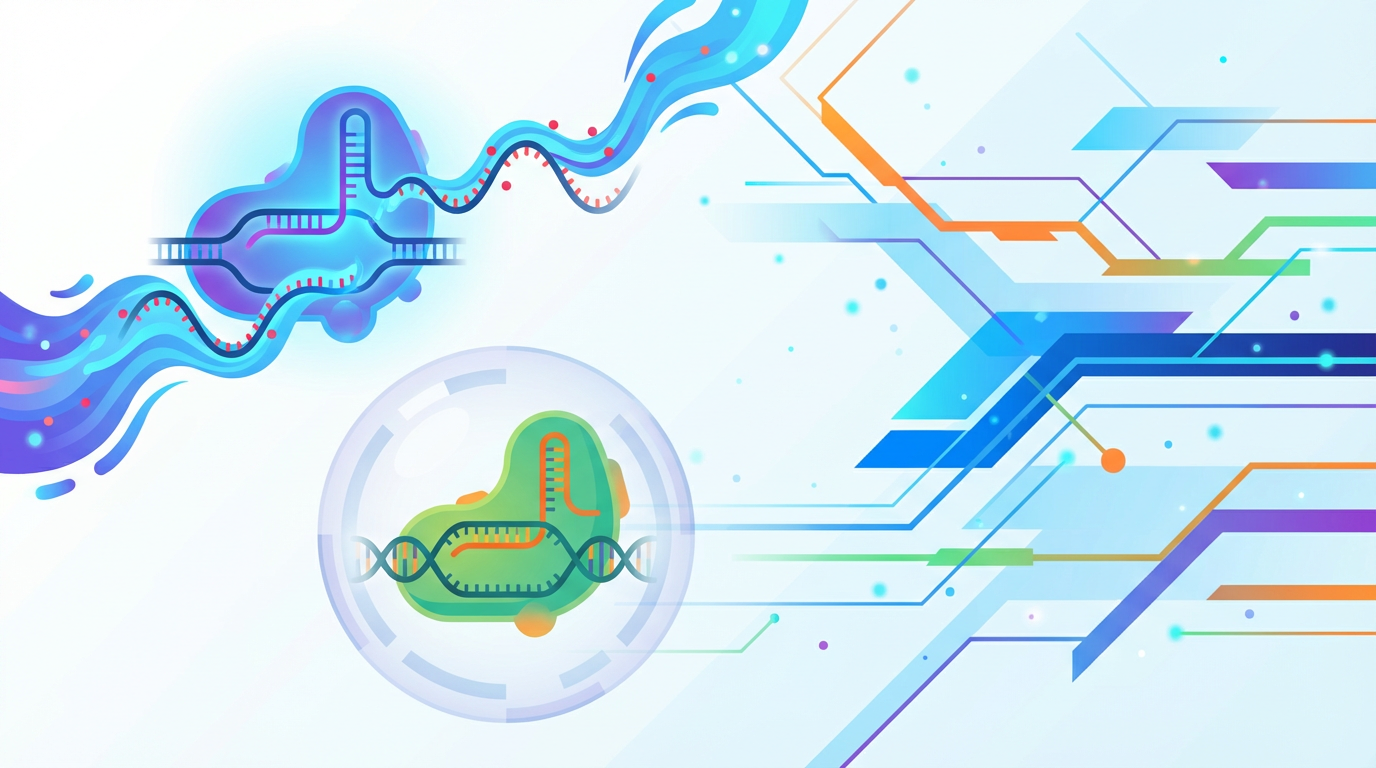
The secret weapon wasn’t the familiar Cas9 that made Jennifer Doudna and Emmanuelle Charpentier household names among science enthusiasts. Instead, it was Cas13, the RNA-targeting cousin that has been quietly developing in laboratories worldwide while Cas9 dominated headlines. What makes this moment so important isn’t just the impressive efficacy numbers, but what they represent: a fundamentally different approach to genetic medicine that could reshape how we think about treating disease.
For those of us who have been following this space obsessively, watching every preprint and conference presentation, 2025 felt like the year Cas13 finally stepped out of Cas9’s shadow. The clinical results weren’t just promising. They were transformative in ways that suggest we might be looking at the future of genetic therapeutics.
Why RNA Editing Changes Everything We Thought We Knew
The fundamental difference between Cas9 and Cas13 operations reveals why this shift matters so much. Cas9 cuts DNA with the precision of a molecular scalpel, creating permanent changes that are inherited by every subsequent cell division. It’s powerful, but it’s also irreversible. Once you make that cut, you’re committed to living with the consequences. Cas13, by contrast, works entirely within the RNA realm, temporarily silencing messenger RNA without touching the underlying genetic code. Think of it as the difference between permanently rewriting a book versus temporarily covering up certain words while reading.
This reversibility transforms the entire risk-benefit calculation for genetic therapies. When I explain this to friends outside the field, I often use the analogy of medication versus surgery. Traditional gene therapy with Cas9 is like performing surgery on your genome. Effective when it works, but carrying permanent consequences. Cas13 therapy is more like taking a sophisticated medication that can be adjusted, paused, or stopped entirely based on how a patient responds.
The therapeutic implications extend far beyond safety considerations. The Nature Medicine Cas13 coverage study published comprehensive data showing that Cas13 systems can potentially target 89% of known disease-causing RNA sequences, compared to Cas9’s coverage of just 23%. This isn’t an incremental improvement. It represents access to an entirely new universe of therapeutic targets that were previously considered undruggable.
The Wall Street Awakening and What It Reveals
Financial markets often act as an unintentional barometer of scientific progress, and the January 2026 surge in Prime Medicine’s stock price told a compelling story about industry confidence in Cas13 technology. The 340% jump following FDA fast-track approval wasn’t just about one company’s success. It reflected a broader recognition that RNA editing had crossed the threshold from promising research tool to viable therapeutic platform.
Having followed biotech markets through numerous boom-and-bust cycles, I’ve learned to distinguish between hype-driven speculation and genuine breakthrough moments. The sustained interest in Cas13 companies throughout 2026, even as broader biotech indices struggled, suggests that institutional investors are beginning to understand the fundamental advantages of RNA-targeting approaches. Unlike the often-chaotic early days of Cas9 commercialization, the Cas13 transition has been marked by more measured, science-driven investment decisions.
This financial validation matters because it provides the capital necessary for the extensive clinical trials required to bring these therapies to patients. The success of early Cas13 programs is already attracting major pharmaceutical partnerships, creating a positive feedback loop that should accelerate development timelines across the field.
Breaking Through the Blood-Brain Barrier
Perhaps the most exciting development in the Cas13 story emerged from Jennifer Doudna’s laboratory at UC Berkeley in February 2026, when her team demonstrated successful delivery of Cas13 systems to brain tissue using engineered exosomes. This breakthrough addresses one of the most persistent challenges in genetic medicine: getting therapeutic molecules across the blood-brain barrier and into the central nervous system where many devastating diseases originate.
The elegance of the exosome delivery approach reflects the kind of creative problem-solving that makes following this field so addictive. Rather than trying to force synthetic delivery vehicles across biological barriers, Doudna’s team essentially hijacked the body’s own intercellular communication system. Exosomes are naturally occurring vesicles that cells use to exchange proteins, lipids, and genetic material, including across the blood-brain barrier. By engineering these biological packages to carry Cas13 systems, the Berkeley team created a Trojan horse approach that leverages millions of years of evolutionary optimization.
The implications for neurological diseases are staggering. Conditions like Huntington’s disease, ALS, and various forms of dementia have remained largely untreatable partly because we couldn’t reliably deliver therapeutic agents to affected brain regions. If the exosome delivery approach proves broadly applicable, it could open therapeutic pathways for dozens of previously intractable neurological conditions.
The Quiet Transformation of a Field
What fascinates me most about the Cas13 revolution is how it exemplifies the non-linear nature of scientific progress. While media attention remained focused on Cas9’s continued development and occasional setbacks, a parallel ecosystem of RNA-editing research was quietly maturing in laboratories worldwide. The researchers working on Cas13 systems weren’t trying to replace Cas9. They were solving fundamentally different problems that required fundamentally different tools.
This pattern repeats throughout science history: breakthrough technologies often emerge not from incremental improvements to existing approaches, but from researchers pursuing entirely different questions. The scientists who first characterized Cas13 systems were studying bacterial immune responses, not trying to develop human therapeutics. Yet their basic research created the foundation for what may become the dominant approach to genetic medicine within the next decade.
The human side of this transformation reveals the collaborative nature of modern molecular biology. Unlike the sometimes-contentious early days of CRISPR development, the Cas13 field has been marked by unusually open collaboration between academic laboratories and industry partners. Perhaps learning from earlier experience, researchers have been more proactive about sharing protocols, comparing results, and establishing safety standards before problems emerge.
As someone who spends far too many late nights reading preprint servers and following conference presentations, I find myself increasingly convinced that we’re witnessing one of those rare moments when a field pivots toward an entirely new paradigm. The convergence of improved delivery mechanisms, expanded targeting capabilities, and demonstrated clinical efficacy suggests that RNA editing may finally be ready to fulfill the promises that gene therapy has been making for decades.