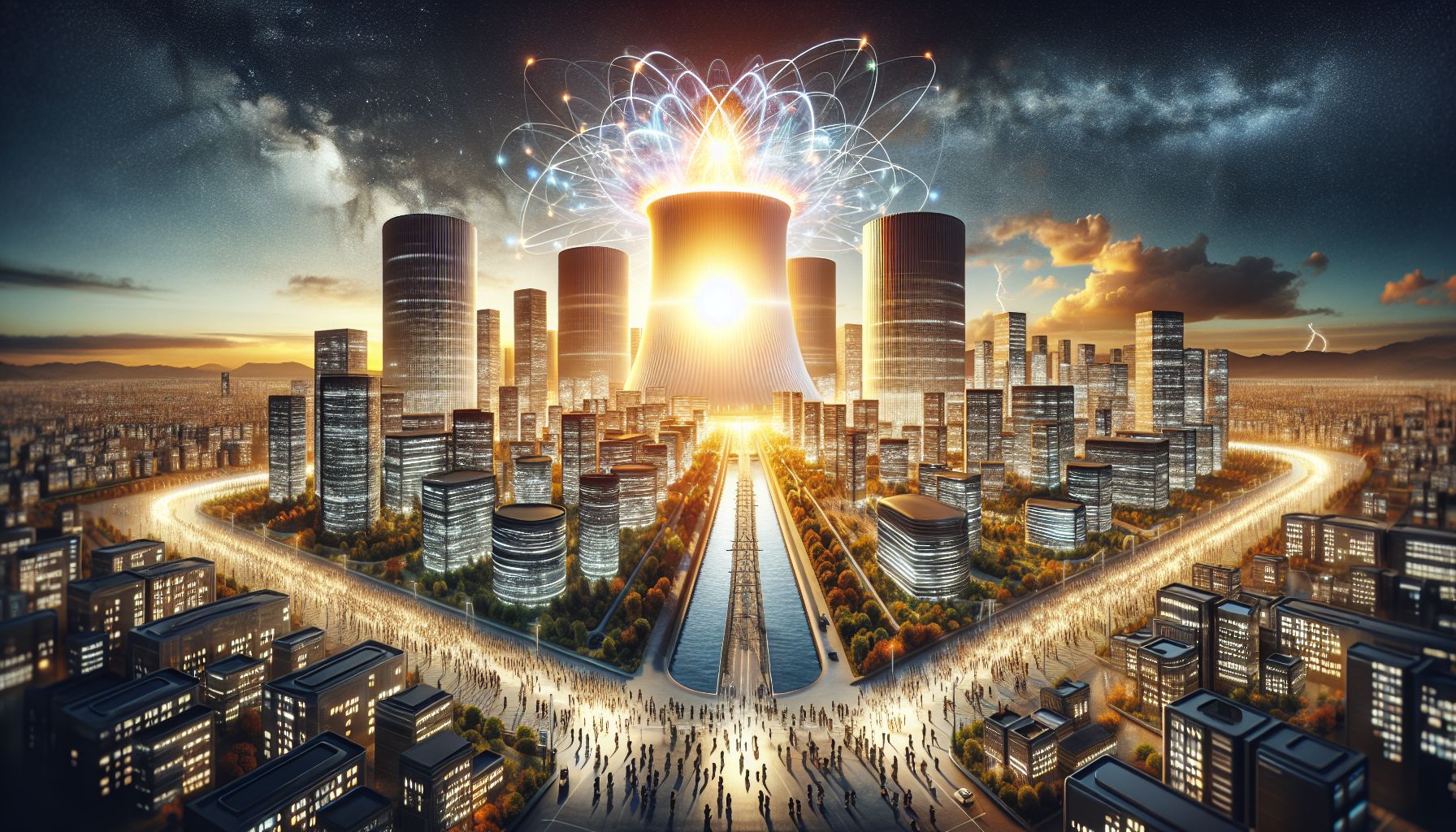

There’s a new dawn on the horizon of technology, and it’s not just about faster gadgets or smarter algorithms. Today, we’re talking about something big: nuclear fusion. For all the Thomas Edison wannabes out there dreaming of harnessing the sun’s power here on Earth, this is no sci-fi fantasy. It’s actually happening, and it’s getting closer to unplugging us from the dirty power matrix. So grab your helmets as we explore how nuclear fusion could reshape our techno-utopian dreams.
The Holy Grail of Clean Energy
We’ve all heard the catchy buzzwords before: carbon-neutral, renewable, sustainable. While solar panels and wind turbines are great, they just don’t have the raw power density to completely kick fossil fuels to the curb. Enter nuclear fusion. We’re talking about the same reaction that powers the sun. Limitless energy without radioactive waste or the risk of a meltdown. It’s like Prometheus handing us heavenly fire, except we won’t get busy regrowing our livers this time.
So, how close are we, exactly, to this Eden of energy? Well, recent strides have pushed fusion from “decades away” to “look what we just figured out.” Last year, some brainiacs over at MIT hit a major milestone by creating a mini sun. Basically a reactor generating more energy than it consumes. That’s like getting your money back and then some every time you fill up your car. The net-energy-gain, or Q-factor, has been the fusion community’s white whale, and we’re finally starting to reel it in.
The Surprise Contenders
But it’s not just the usual suspect of governments throwing billions in dusty old labs. The startup ecosystem, known more for apps that deliver burritos faster, is diving into fusion like it’s an Olympic sport. Companies like Tri Alpha Energy and Helion Energy are leading this charge, backed by classic Silicon Valley capital influx. You know those guys can’t resist a good moonshot.
Helion Energy, for example, recently turned heads by demonstrating their ability to reach 100 million degrees Celsius. Six times the temperature at the sun’s core. I know, it’s hard to fathom a lab doing anything hotter than my high school chemistry experiments, which at their best could melt a gummy bear. Yet here we are.
Why Fusion Over Fission?
Now, some of you might rightly interject, “Isn’t nuclear energy old hat?” Well, nuclear fusion’s lesser cousin, nuclear fission, gave us real benefits, but it also came with a shadow of waste and risks (yes, Chernobyl fans, that’s your cue). Fusion, on the other hand, uses isotopes of hydrogen. It’s as clean as your favorite zero-emission vehicle, with helium being the innocent byproduct you release into the atmosphere. Not exactly laugh-in-a-room full of balloons, but it won’t melt the ice caps either.
Plus, putting fusion into our energy grid solves load balancing issues plaguing renewable sources. Fusion reactors work irrespective of wind or sunshine. Think of it as the most reliable Netflix service for all your future electricity needs. Your weekend binging sessions can be guilt-free knowing your apocalyptic survival drama isn’t powered by coal sludge.
Challenges on the Horizon
Okay, before you start hanging ‘Fusion is here!’ banners in every room, let’s temper our enthusiasm a bit. While the prospects are juicy, challenges abound. The tech needed to sustain the exact temperature and pressure isn’t just finicky, it’s downright precarious.
These advanced reactors are, for now, costly and confined to proof-of-concept stages. Making them affordable and widespread requires material advancements not yet achieved. This makes every research grant matter. It’s a relentless marathon rather than a sprint to the fusion finish line. Think of it as running a race with hurdles taller than you but armed with rocket shoes you’ve yet to fully figure out.
The Future Perfect
Looking ahead, here’s my futurist hat: predictive scenarios position nuclear fusion as our prime energy source within the next 20-30 years. This might seem distant, but hey, Rome wasn’t built in a day, and neither will a worldwide fusion rollout.
But imagine with me: cities where smoggy skies are replaced with endless blue, an Earth where every low-income country isn’t energy-starved, and even that grumpy neighbor down the street finally has something positive to grumble about. Fusion could be the backbone, not just for energy but also as a catalyst for economic change worldwide.
Wrapping this up, the journey to fusion’s holy grail is both thrilling and turbulent, but promising. It’s like cooking the ultimate meal on Earth’s biggest stage without setting the kitchen on fire. No easy feat, but definitely worth the effort. So keep your eyes peeled. With a bit of patience, we might just power our dreams with the very stars above us. How’s that for thinking big while keeping it impossibly optimistic?