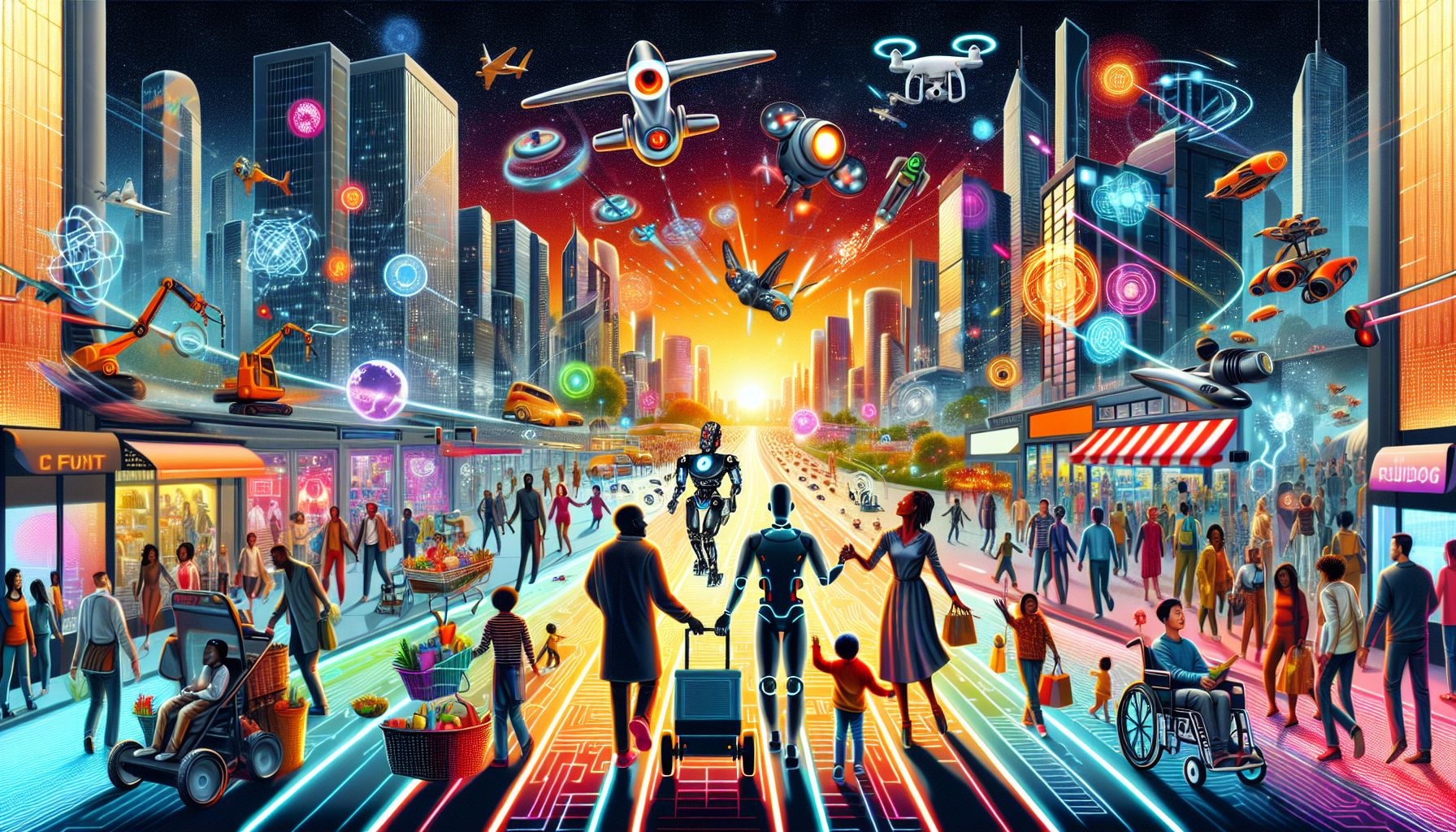

Crack open your front door tomorrow morning and you might just be greeted by a friendly robot dropping off your groceries. Just kidding—it’s still me, the stereotypical delivery driver you forgot to tip. However, we’re not as far away from that scenario as you might think. Every day, the world of robotics is creeping closer into our everyday lives—and I, for one, can’t wait for our metal overlords to take over, at least when it comes to the chores.
Why Robotics Now?
First things first, let’s tackle the why. Why is robotics suddenly all the rage? It’s not like robots are new. Well, it all comes down to two words: technological advancement. We’ve hit a sweet spot where machine learning, computer vision, and hardware have matured enough that these once bulky and temperamental beasts are becoming as sleek and polished as the iPhone in your pocket.
Think of it this way: remember the flip phone? Yup, the one you had in high school that probably still works if you plug it in. Robotics was stuck in a similar era of clunky functionality until recent breakthroughs launched it toward smartphone-level sophistication. But unlike smartphones, robots can physically interact with the world in ways that might completely reshape how we live.
From Factory Floors to Living Rooms
For decades, we’ve seen robots dominate factory floors—those massive machines tirelessly welding your aunt’s new SUV together. But what about taking a load off at home? The Roomba was an early hint (and who doesn’t love the idea of a frisbee-sized vacuum cleaning up after them?).
Today’s robots are way more advanced. Take Boston Dynamics and their infamous (and impressively agile) dog-like robot, Spot, for example. It’s practical, albeit a bit eerie to watch. Then there’s the lovable SoftBank Robotics’ Pepper, who can interact socially with people and even recognize emotions. Who knew we’d reach the point where our own homes could feel like an episode of a futuristic sitcom?
Practical Uses in Daily Life
So how exactly will robots fit into our everyday routines? Let’s look at a few scenarios that are more fact than science fiction.
Healthcare Helpers
Robots in healthcare are the unsung heroes of recent years. Picture this: surgical robots allowing for precision operations with the steady hand of a machine. Or robotic exoskeletons helping those with mobility issues get around with newfound independence. And as cute as robots getting tangled in stethoscope cords might seem, the utility is serious business. These medical robots offer reduced human error, streamlined procedures, and better patient care quality.
Kitchen Companions
Picture a robot chef expertly flipping your omelet every morning (well, if you can afford it). Companies like Moley Robotics have developed robotic kitchen assistants that move with the grace of a Michelin-starred chef. Automated arms can now manage meal prep with surgical precision. Move over Gordon Ramsay, but don’t worry, it’s unlikely robots will start barking orders at terrified sous-chefs anytime soon… or might they?
Warehouse Work
Amazon’s warehouses are already a playground for robots. Automated transport units zoom around aisles faster than Sunday drivers on a Monday morning commute. By optimizing pathfinding and load management, these machines are a big reason why Amazon’s “same-day delivery” is, more often than not, a reality.
Challenges and Questions
Don’t get me wrong; it’s not all rainbows and dancing robots. There are hurdles to address, like how we tackle the ethical considerations and possible job displacements caused by robotic integration. There’s a debate raging similar to the fiery clashes that surrounded the early days of personal computers. Can robots truly “replace” jobs, or will they just create new—and hopefully better—career paths? The jury is still out, but ignoring these implications wouldn’t just be a missed opportunity; it’d be a giant robot-sized mistake.
Security and privacy? Also on the table. When you have a robot that can potentially access your home, privacy isn’t just about encrypted passwords anymore but about physical access too.
Looking Forward to a Robotic Tomorrow
So what’s the verdict? Are we heading toward a utopia where robots serve us lattes and do our laundry, or is there more chaos than clarity ahead? I’m optimistically banking on the former with a healthy dose of skepticism.
In my opinion, the real beauty of robotics isn’t just the tech itself but the potential to actually improve our lives. It could free us from mundane tasks, bringing us closer to a world where we focus more on creativity, innovation, and the things that make us most human.
So, grab a coffee, feed your cat (while you still have to), and prepare your welcome mat for your robot companion of the not-so-distant future. The era of robotics isn’t just coming; it’s walking straight through the front door.