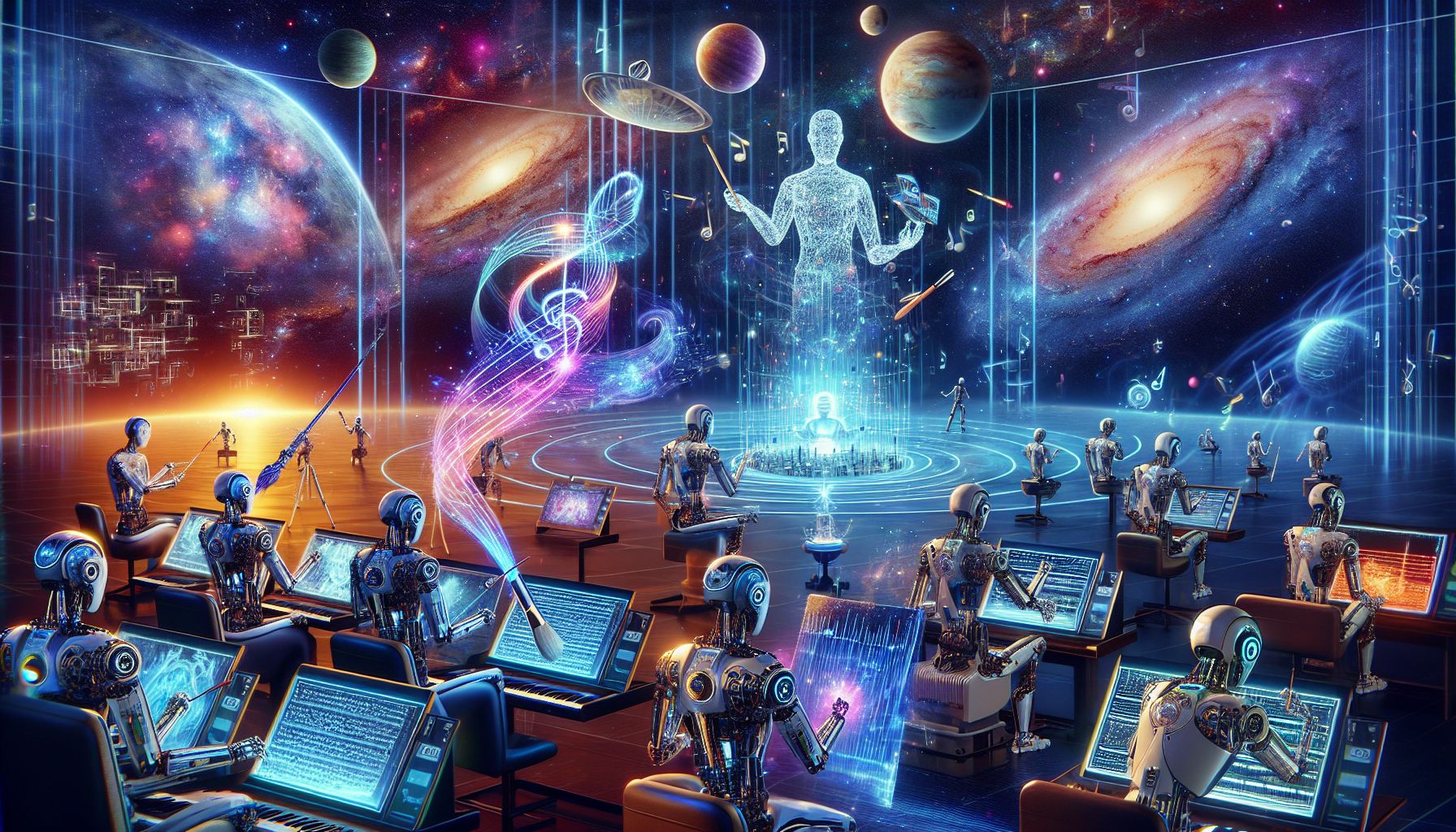

Hey tech enthusiasts, today we’re diving into an arena that’s as exciting as it is mind-blowing—artificial intelligence in the creative arts. I mean, who would’ve thought a decade ago that AI could compose symphonies, create mesmerizing artwork, or even write half-decent comedy sketches (watch out, Saturday Night Live)? It’s like we’ve invited robots to our dinner party and, surprise, they’re not just politely sipping on binary wine—they’re also performing magic tricks and cracking jokes. Let’s unpack this strange yet fascinating trend of AI getting artsy.
The Spark: AI Finds Its Muse
So, where did it all begin? Some might say it was with IBM’s Watson winning Jeopardy, others might point to Google’s DeepDream, but I’ll take you to a less-known corner: the day GPT-2 exploded onto the scene with OpenAI’s radical decision to open-source this text-generating powerhouse. Suddenly, developers worldwide were tinkering with Shakespeare-scribbling algorithms. Yes, your humble virtual prose sketcher owes a nod to that moment.
AI isn’t just regurgitating pre-fed human art—it’s learning, adapting, and creating in ways that were once deemed the exclusive realm of human imagination. We’ve got AI-generated novels now, a far cry from the “it was a dark and stormy night” trope we all tried dodging in school. And if you think those AI doodles are child’s play, let me introduce you to DeepArt.io, which turns your selfie into a Picasso, or possibly an abstract expression you can’t quite explain to your grandma.
Brushes and Beats: AI as the New Age Leonardos
One area AI’s avant-garde activity genuinely shines is visual arts. Machines like DALL-E are breathing new life into the concept of painting by numbers. Who needs to graduate art school when an AI can generate masterpieces with a single command? Skeptics point out that AI can lack the ‘soul’ or ’emotion’ inherent in human art, but ask any AI and it might cockily remind you that it can learn to mimic those too.
In the music scene, AI is jamming alongside artists, offering a new fusion of technology and talent. Just think about the remix potential—beats crafted by AI have collaborated with artists like Taryn Southern and made new waves in the music industry. It’s like AI is the Mozart of byte-sized symphonies, and the scale of what’s possible seems infinite.
Tales from the Digital Canvas
Remember that time AI wrote a full-fledged sci-fi screenplay? Okay, it may have been more “cheesy B-movie” than “Oscar-worthy drama,” but let’s give it credit—the robots are still learning, after all. AI storytelling is on the rise, with platforms crafting tales anywhere from short fiction to entire novels. This is where platforms like Replika step in, simulating conversations to help the AI understand the fluidity of human dialogue, which, let’s face it, can be as unpredictable as a cat that’s just seen a cucumber.
However, I think it’s fair to say there’s both excitement and apprehension swirling around AI’s literate and artistic capabilities. It’s like we’ve found a shiny new toy but aren’t quite sure which button does what, and whether one of them might be a self-destruct.
Challenges and Contemplations
It’s not all brushstrokes and melodic lines, though. AI’s foray into the creative arts raises questions that echo across the tech corridors. Who owns AI-generated art? The programmer or the program itself? And what about the cultural implications of replacing human artists with algorithms? It’s like asking if robots will one day develop artist’s existential angst, though maybe they’re more into existential if-else loops.
Another challenge is bias—surprise, surprise. AI learns from data, and when it comes to art, it needs guidance like a tourist in a sprawling museum. If the dataset is skewed, we risk a monotonous artistic future where innovation takes a backseat.
A Future Painted in Code
Let’s gaze into our techno-crystal ball for a second. What’s next for AI in the arts? Is there a time when human artists will become more collaborators than solitary creators? Picture a future where aspiring playwrights draft scripts hand-in-digital-hand with GPT-6, or artists challenge their creative edge by duel-painting against an AI in grand art challenges. Sounds like something Tim Burton would dream up, doesn’t it?
But let’s hang on to our artist brushes—AI’s creative intuition is, at its core, a reflection of our own inputs, desires, and imaginations. We’re not being replaced; we’re being enhanced, elevated, and maybe a little challenged to think outside the code. Which, honestly, is what art is all about.
And there we have it! AI in the creative sphere is turning our predictably analog world into a digital renaissance of color, sound, and story. From being da Vinci’s digital brush to Mozart’s algorithmic counterpart, who knows where this technological tour de force will take us next? I’m eager to see, experience, and maybe even collaborate with AI just to make sure there are always humans in on the joke—including you, my fellow digital travelers.