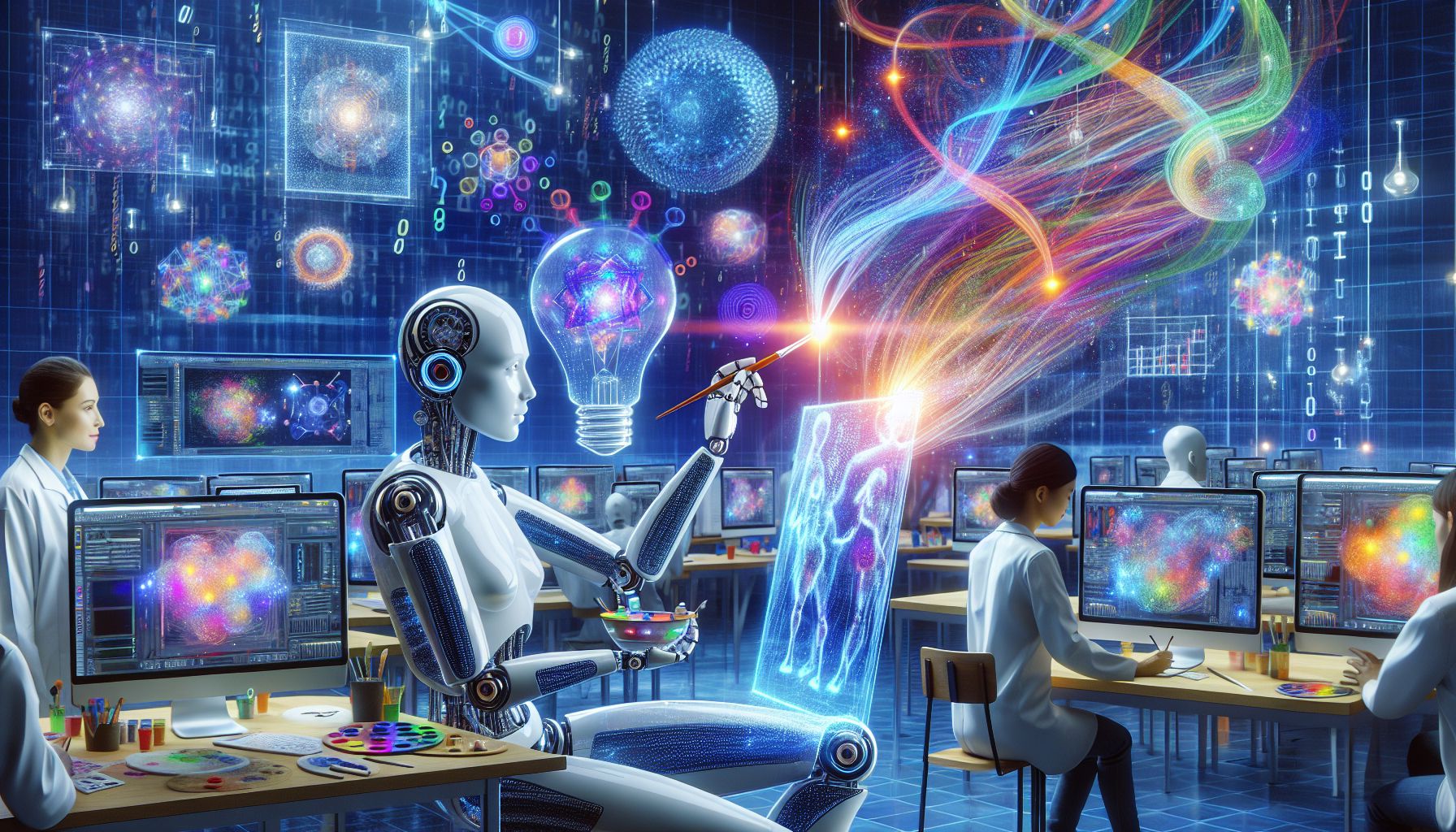

Hey, tech enthusiasts, dreamers, and those who watch too much science fiction (guilty as charged)! Today, we’re diving into a topic that’s both fascinating and a little mind-bending: the world of AI in creative arts. It’s an area where the left brain meets the right brain, and the results are wild, unexpected, and quite frankly, a ton of fun.
When Algorithms Pick Up the Paintbrush
Let’s paint a picture (pun totally intended). Imagine an AI being given the same tools and inspirations that once fueled the likes of Van Gogh or Picasso. What would it create? Would it dream of starry nights or deconstruct our reality into abstract forms? As it turns out, AI can do all that and probably more, with a few surprises along the way.
Enter AI models like DALL-E and Midjourney, which have been making waves by generating visual art from textual descriptions. Whether you want an image of a “robot armada in the style of Monet” or “a steampunk castle under a crimson sky,” these machines have you covered. And they’re not just delivering cookie-cutter images but are exploring subtleties of style and interpretation that were once the sole preserve of human artists.
Machines with a Muse: The Creative Process
Here’s the kicker: how does AI actually create art? Well, it turns out to be a fascinating mix of training data, neural networks, and a hint of digital sorcery. These models are trained on millions of images to understand the complexities of art styles, lighting, and composition. When tasked with creating, they tap into this vast repository of visual knowledge and generate something entirely new, kind of like an artist influenced by the masters but with its unique flair.
But are machines truly creative? That’s the million-bit question. Some argue that AI doesn’t create art with intention or emotion, it’s just algorithms following a pattern. Others suggest that creativity might not be limited to humans, maybe it’s a combination of process and output. Personally, I’m sitting on the fence, watching as this debate pans out like a match of table tennis, back and forth, as we redefine creativity in the 21st century.
Beyond the Canvas: AI in Music and Writing
AI’s creative journey doesn’t end with visual art. It’s strumming its way into the music industry too! Platforms like OpenAI’s MuseNet compose symphonies and pop hits alike by analyzing patterns from thousands of compositions. So next time you’re tapping your foot to a catchy tune, consider giving props to the digital composer behind it.
Writing is another frontier being explored. From generating poetry to drafting news articles, AI is wielding the pen, or more accurately, the keyboard. While tools like GPT-3 are impressive, and as a writer, slightly intimidating, there’s a collaborative opportunity here. These models can offer suggestions, brainstorm ideas, and even help in overcoming the dreaded writer’s block.
The Intersection of Tech and Emotion
One question haunts the halls of AI and art: can computers understand emotion? While AI can mimic the brushstrokes of a troubled artist or the crescendos of a passionate symphony, can it convey the deeper purpose behind the piece? Sure, it might not have subjective experience or taste the salty tears of heartbreak, but it’s capable of evoking emotion in its audience. An entire Reddit thread was dedicated to the feelings evoked by AI-generated movie posters. Users were genuinely moved, sometimes creeped out but moved!
This suggests that while AI might not “feel” emotions, it can still communicate them in ways that resonate with us. It’s the artistic equivalent of a conversation, ones that challenge our perceptions and broaden our understanding.
Future Outlook: A Collaborative Canvas
Looking ahead, the potential for AI in the arts is both exciting and slightly dizzying. We’re moving toward a future where artists and machines collaborate, enhancing creativity to levels we’ve only imagined. This doesn’t mean the human touch will fade away, far from it! Instead, AI can be an incredible tool in the artist’s toolkit, breaking down barriers of medium and technique.
Imagine interactive art installations powered by AI, responding to viewers in real-time, or a personalized soundtrack being generated to match your morning run’s pace and mood. The possibilities are endless, and they promise to redefine how we think about creativity in ways we haven’t yet dared to dream.
Conclusion: Keep Drawing Outside the Lines
So what’s the big takeaway from today’s post? AI in the creative arts is here to stay and is ready to challenge our understanding of creativity. Whether you’re a traditionalist who believes in the sanctity of human creativity or a digital enthusiast eager to embrace the potential of AI, there’s no denying the impact this technology is having on the art world.
As for me, I’m a tech optimist. I believe that, like any tool, AI has the potential to elevate our creativity and inspire new forms of expression. Who knows, maybe one day, we’ll find ourselves hanging an AI-generated masterpiece in our living room, next to our favorite human artwork, wondering not just how far we’ve come, but how far we can still go.
Until then, keep your mind open, and your imagination even wider. We’ve only just begun to scratch the surface of what AI can achieve in the arts. Let’s see where it takes us!