
The Cardiovascular Discovery That Changed Everything
I remember reading the SELECT trial results when they first landed in late 2023, and I had to read the abstract three times before the numbers actually registered. Here was semaglutide—a drug we all knew as Wegovy, the weight loss injection everyone was talking about at dinner parties—showing a 20 percent reduction in major cardiovascular events in non-diabetic obese patients. But here’s the part that kept me awake that night: this benefit held independent of how much weight people actually lost. That distinction matters.

The conventional wisdom in cardiology has always been that cardiovascular protection flows downstream from weight reduction. Lose weight, improve your metabolic markers, live longer. It’s straightforward. Elegant. And apparently, incomplete. The SELECT Trial Results – New England Journal of Medicine suggested something far more interesting was happening at the molecular level. The drug was doing something to the cardiovascular system that transcended the simple mechanics of shedding pounds. Researchers found themselves staring at data suggesting direct protective mechanisms—perhaps through GLP-1 receptor signaling in cardiac tissue itself, or through effects on inflammation and endothelial function that operate independently from body weight.
By 2025, when the four-year follow-up data emerged, the cardiovascular signal had only strengthened. This wasn’t a transient benefit that faded with time. It was sustained protection, and it was forcing the entire field to reconsider what these drugs actually do inside the body. Cardiologists who had dismissed GLP-1 agonists as mere weight loss tools suddenly found themselves genuinely curious about the underlying biology.
The Addiction Findings That Nobody Expected
Then came the moment I genuinely had to pause and consider whether the scientific world was prepared for this. A 2025 randomized controlled trial published in Nature Medicine – GLP-1 and Addiction Study examined 800 patients with alcohol use disorder and found that GLP-1 receptor agonists reduced relapse rates by approximately 40 percent. Forty percent. In addiction medicine, that’s not just statistically significant—it’s transformative.
The researchers didn’t stop at alcohol. The data hinted at similar protective signals for opioid cravings and nicotine dependence. Think about what that means. A single class of molecules potentially addressing three of the most consequential addiction epidemics simultaneously. The mechanistic puzzle deepens: GLP-1 receptors exist throughout the brain’s reward circuitry, but we still don’t fully understand why activating them would dampen the neurological drive toward addictive substances. The conventional explanation—that weight loss improves self-efficacy and motivation for recovery—doesn’t adequately explain results this robust.
What fascinates me most is that this wasn’t the intended use case. Nobody designed these trials expecting addiction outcomes. But addiction is fundamentally a disorder of the brain’s reward system, and GLP-1 signaling appears to modulate that system in ways that extend far beyond appetite suppression. The field is now quietly scrambling to understand whether we’ve stumbled upon something genuinely novel in addiction treatment, or whether we’re witnessing a statistical artifact that subsequent research will refine.
The Speed of Adoption That Defies Historical Precedent
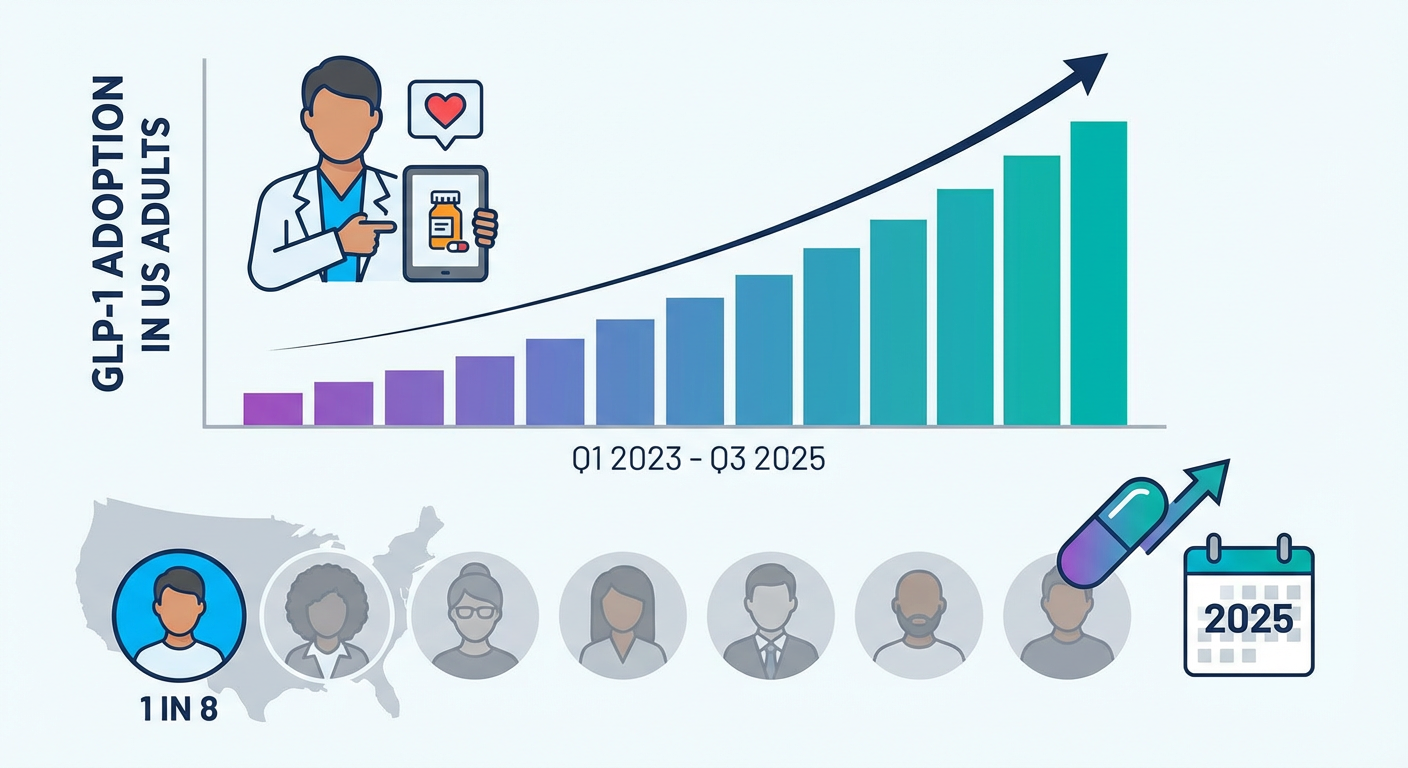
Here’s a statistic that still startles me: by the third quarter of 2025, one in eight adults in the United States had been prescribed a GLP-1 medication. One in eight. Novo Nordisk didn’t quietly announce this in a footnote. The company recognized they were witnessing the fastest adoption of any drug class in American pharmaceutical history. For context, even blockbuster statins took years longer to reach this penetration rate.
The adoption curve tells its own story about physician confidence and patient demand. Doctors weren’t forcing these prescriptions on reluctant populations. Word of mouth, celebrity endorsements, and genuine clinical efficacy created a pull dynamic where patients actively sought out GLP-1 therapies. Pharmacy benefit managers struggled with prior authorization requests. Supply chains faced real constraints. The market was signaling something unmistakable: whatever these drugs were doing, people wanted access to them.
This rapid adoption has consequences that extend beyond simple pharmaceutical market dynamics. When a single drug class reaches saturation this quickly, it inevitably becomes embedded in clinical practice before we’ve completed all the long-term safety investigations we’d ideally prefer. That’s not a condemnation—it’s an observation about the real-world tension between addressing suffering now and understanding all mechanisms later. The scientific community is essentially running a massive, uncontrolled experiment at the population level, and we’ll be analyzing the data for years.
The Neurobiological Mechanisms We’re Only Beginning to Understand
This is where the story becomes genuinely speculative, and I want to be careful about distinguishing confirmed findings from promising leads. Researchers at the Karolinska Institute published work in early 2025 demonstrating that semaglutide reduces neuroinflammation markers in the brain by 30 to 45 percent. Neuroinflammation has emerged as a central mechanism in addiction, depression, and neurodegenerative diseases. If GLP-1 agonists genuinely suppress this inflammatory cascade, we might be looking at a neuroprotective mechanism that extends far beyond the indications we’re currently investigating.
The proposed mechanism involves GLP-1 receptor signaling on microglial cells, the brain’s resident immune cells. When activated inappropriately, microglia drive chronic neuroinflammation. GLP-1 agonists appear to suppress this overactivation, potentially creating a neuroinflammatory environment more conducive to recovery from both metabolic disease and addiction-related damage. This is still early work. We’re looking at mechanistic data from animal models and biomarker studies in humans. But the signal is consistent enough that addiction specialists and neuroscientists are now collaborating on follow-up investigations.
What I find genuinely intriguing is how this mechanism might unite seemingly disparate clinical observations. Weight loss, cardiovascular protection, and addiction recovery might all reflect a common underlying ability to reduce pathological inflammation and restore homeostatic signaling in multiple organ systems. If that’s true, we’re not looking at a drug that treats three separate conditions. We’re looking at a drug that addresses a fundamental biological dysfunction, and the clinical manifestations just depend on which tissues suffer most from that dysfunction in a particular patient.
The Economic Scale That Will Reshape Healthcare
The financial numbers ground this discussion in sobering reality. The global GLP-1 market reached approximately 50 billion dollars in 2024. Goldman Sachs Research projects it will exceed 130 billion dollars annually by 2030. That’s not growth—that’s transformation. For context, the entire oncology drug market operates in a comparable financial range. A single drug class is matching the combined revenue of cancer therapeutics.
These numbers tell us something about the structural economics of healthcare over the next five years. They suggest that manufacturing capacity, supply chains, and insurance reimbursement frameworks will be stretched. They hint at which pharmaceutical companies will emerge as dominant players in the coming decade. They indicate that whoever controls the intellectual property and manufacturing for next-generation GLP-1 drugs will possess extraordinary economic leverage. But beneath the financial story lies something more fundamental: these numbers reflect genuine clinical efficacy meeting massive unmet medical need. The market isn’t inflating around snake oil. It’s expanding because hundreds of millions of people are experiencing real benefit.
I keep returning to the same question: what else don’t we know? We’ve discovered cardiovascular protection, addiction treatment signals, potential neuroprotective effects, and mechanisms involving neuroinflammation suppression. These drugs have been studied for diabetes for over a decade, and yet 2024 and 2025 still delivered genuinely surprising findings. That suggests we’re still in the early chapters of understanding what GLP-1 receptor agonists actually do. The cardiovascular data will need replication in different populations. The addiction findings need to move from single trials toward robust meta-analyses. The neuroinflammation mechanism needs translation from biomarkers to clinical outcomes.
If you’ve been following the GLP-1 story and you have insights from your own professional experience or have stumbled across research that changes how you think about these findings, I’d genuinely like to hear from you.