
The Carbon Vault We Never Wanted to Open
Here is a number that stops me cold every time I think about it: one and a half trillion metric tons of organic carbon locked in Arctic permafrost right now. To make that comprehensible, which is frankly difficult, consider this comparison. The entire atmosphere currently holds roughly 750 billion metric tons of carbon dioxide equivalent. The frozen ground beneath the Arctic contains roughly twice that amount, sequestered and dormant, waiting. It is as though we have been living above an unlit bomb for ten thousand years, and only recently did we notice the fuse beginning to smolder.
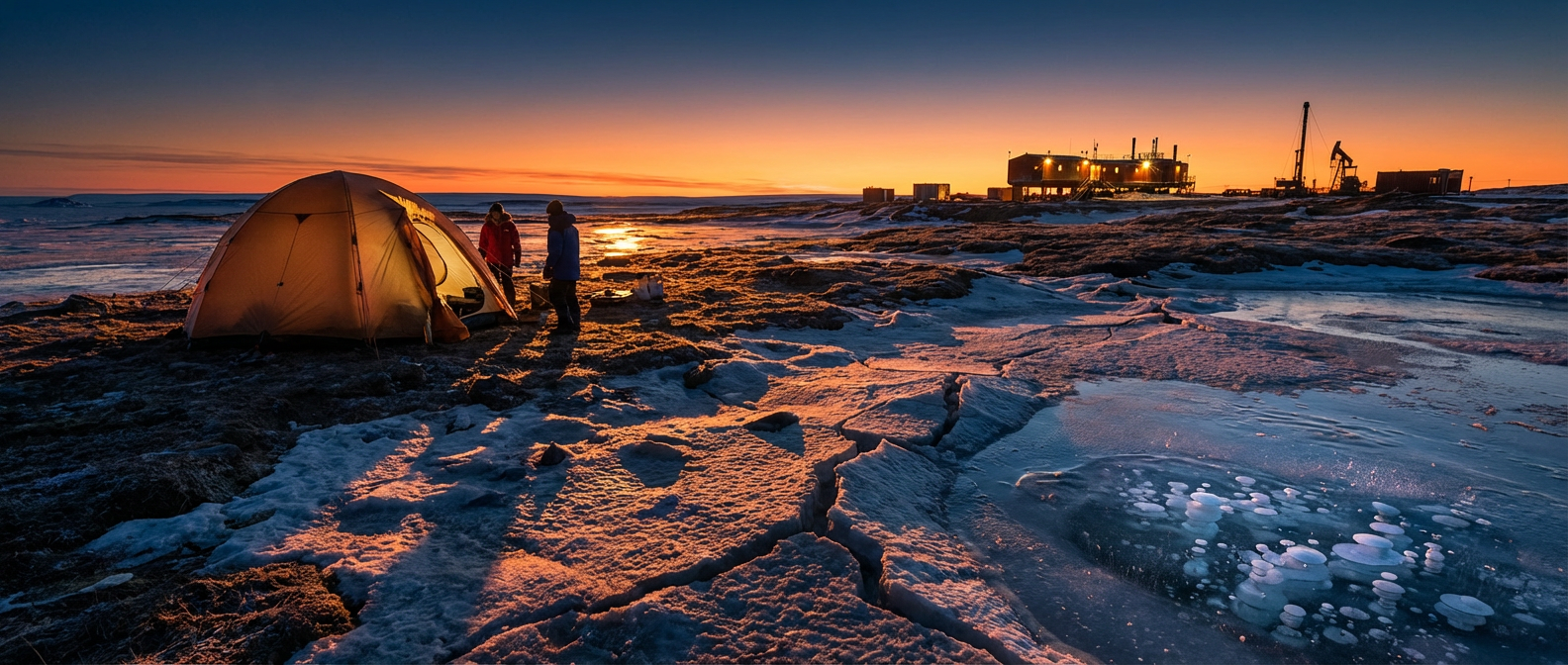
The 2025 supplementary IPCC Cryosphere Special Report brought this calculation into sharper focus than ever before. When I first read the figures, I kept returning to that ratio: two to one. Double the carbon in the air, stored underground. That fact demands we understand what it means, what it does not mean, and what happens if the temperature keeps rising.
The Warming Is Real, Rapid, and Concentrated
Let me be direct about what the data shows, because precision matters here. Siberian permafrost temperatures have risen by an average of 2.3 degrees Celsius between 1990 and 2024. This is not a marginal fluctuation. This is a wholesale shift in one of Earth’s foundational systems. What makes this genuinely alarming is not the average itself, but the acceleration embedded within it. The fastest warming has occurred after 2018. The curve is bending upward.
Why does this matter more than a simple temperature increase elsewhere? Permafrost is not like regular soil. Permafrost is a definition: soil that remains frozen for two or more consecutive years. Once you cross that threshold into consistent thawing, you have crossed from a passive carbon storage system into an active biogeochemical reactor. Microbes wake up. Decomposition accelerates. Carbon that has been inert since the Pleistocene epoch, locked in place for more than ten thousand years, begins its escape.
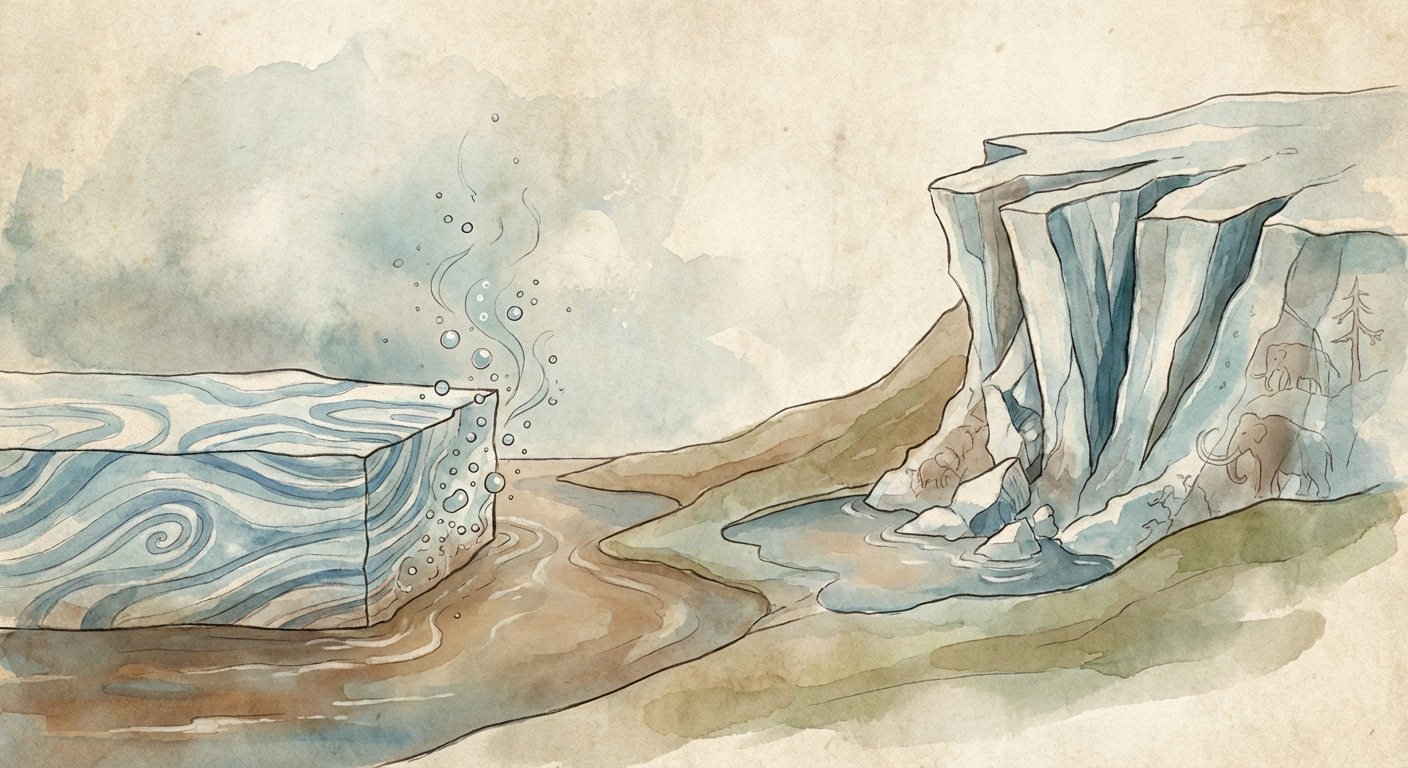
The regional variation matters, though. Not all permafrost warms at the same rate. The Yedoma deposits of northeastern Siberia and Alaska are particularly vulnerable. These are ice-rich soils, sometimes reaching depths of fifty meters, loaded with carbon from an era when woolly mammoths roamed the landscape. When Yedoma thaws, it does not simply release carbon gradually. It collapses. The ground subsides. New water bodies form. The landscape itself becomes unrecognizable.
The Emissions Picture: Worse Than We Hoped, Better Than We Feared
Here is where I need to be careful to separate what we know from what we worry about. A 2025 Nature Climate Change study using satellite methane sensors found that permafrost is currently contributing roughly 0.3 gigatons of carbon dioxide equivalent per year to the atmosphere. This is genuinely lower than the most catastrophic models projected a decade ago. It is not nothing, but it is not runaway acceleration either.
The important caveat arrives immediately after that comma: the emissions are accelerating. We are not at a stable equilibrium. We are in a transition state, and the rate of change itself is increasing. Think of it as the difference between driving at a constant speed and driving on a curve where your velocity is rising. The absolute speed matters, yes, but the fact that you are accelerating matters more for predicting where you will be next.
This distinction is where I find myself genuinely torn between cautious optimism and legitimate concern. The satellite data suggests we have not yet entered a runaway positive feedback loop. The emissions are substantial but still dominated by human activities like fossil fuel burning. But the acceleration trajectory, combined with the massive carbon reserve underneath us, suggests we are approaching a boundary. We do not yet know exactly where that boundary lies.
The Tipping Point We Cannot Ignore
This brings me to perhaps the most sobering finding from 2025 research. The Stockholm Resilience Centre Tipping Points Research identified permafrost thaw as one of six Earth system tipping points that could self-perpetuate beyond 1.5 degrees Celsius of global warming, even if we somehow cut emissions to zero immediately after that threshold. A tipping point in this context is a boundary beyond which a system reverses course not because of external forcing, but because of its own internal dynamics.
Imagine a ball balanced on top of a hill. Nudge it slightly, and it rolls back to center. But push it over the crest, and gravity takes over. The system becomes self-reinforcing. Warmer temperatures thaw permafrost, which releases methane and carbon dioxide, which warms the climate further, which thaws more permafrost. The external push becomes unnecessary. The hill has a cliff on the other side.
The Stockholm analysis did not identify where exactly that cliff lies for permafrost systems. Neither did any other study I have read. What they have done is establish with considerable confidence that such a cliff exists. We do not know if we are 0.5 degrees away from it, or 0.8 degrees, or balanced right on the edge. But we know we are traveling toward it, and we know the distance remaining is smaller than it used to be.
What This Actually Means for How We Should Think
I want to resist the temptation to flip this into either pure doom or dismissive optimism. The evidence supports neither. What the 2025 research actually tells us is that permafrost is not a methane bomb waiting to detonate tomorrow. It is also not a manageable problem we can casually leave for future decades to handle. It is a system in transition, accelerating, with a tipping point somewhere in our future whose exact location remains uncertain.
The scale problem is the real puzzle here. One and a half trillion metric tons of carbon is incomprehensibly large. It is also incomprehensibly much larger than the annual emissions we might prevent through any single policy lever. We cannot solve the permafrost problem by decarbonizing our energy systems, though we absolutely should do that anyway. What we can do is slow the warming, buy time for the system to stabilize, and continue watching for the signals that might tell us we are approaching that tipping point.
The 2025 IPCC report and the satellite data and the Stockholm analysis are all invitations to intellectual humility. We have improved our measurements. We have refined our models. We have identified a critical threshold. We have not yet crossed it. We have not yet guaranteed that we can avoid crossing it. The question that keeps me awake is not whether the risk is real. The question is whether we will treat genuine uncertainty as a reason for action or as an excuse for inaction. What do you think the answer should be?