
Living on a Planet We Barely Know
Here’s a fact that keeps me awake at night, and I mean that literally. Eighty percent of our oceans remain unmapped at any meaningful resolution. We’ve sent rovers to Mars, captured images of black holes, and sequenced the human genome, yet we’re still treating Earth’s most voluminous habitat like an unexplored continent. I find myself returning to this statistic again and again because it crystallizes something essential about where we stand as a species: we’re simultaneously more technologically capable and more ignorant than ever before.
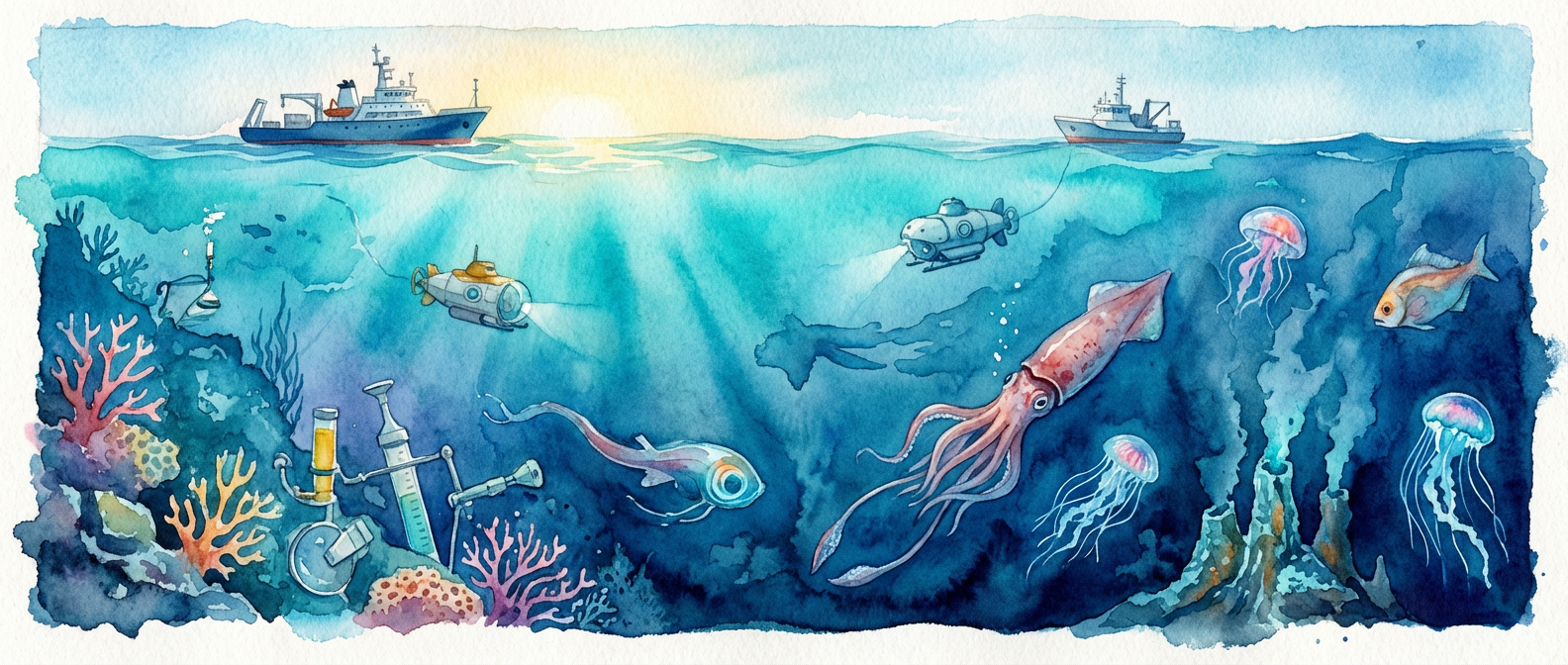
The deep ocean isn’t some abstract concept relegated to documentary specials. It’s a living, breathing system that generates half the oxygen we breathe, regulates our climate, and harbors organisms unlike anything we’ve encountered in the rest of the biosphere. When marine biologists talk about the deep sea with barely contained excitement at conferences, they’re not simply waxing poetic about an interesting research subject. They’re describing a realm where the fundamental rules of life seem negotiable, where creatures thrive under pressures that would crush us instantly, and where entire ecosystems persist without any energy input from the sun.
The Discovery Machine That Changed Everything
For decades, deep ocean research moved at a glacial pace. Manned submersibles were expensive, dangerous, and could only be deployed by a handful of institutions. A single research dive might cost hundreds of thousands of dollars, limiting the scope and frequency of what we could explore. Then came autonomous underwater vehicles, and the calculus shifted entirely. These robotic explorers operate on a different timeline and budget, transforming what was once an exclusive pursuit into something approaching accessibility.
The impact has been staggering. Between improved autonomous vehicles and advanced sampling techniques, marine biologists are discovering new species at a rate of approximately two thousand per year from deep ocean surveys alone. Two thousand. Every single year. That’s roughly five new species every day, many of which are found nowhere else on Earth. Each discovery raises fresh questions about evolutionary pathways, biochemical adaptations, and the underlying logic of life’s distribution across our planet. Institutions like MBARI ocean research have positioned themselves at the forefront of this transformation, combining cutting-edge robotics with rigorous scientific methodology to push what we know about deep marine environments.
The human element here fascinates me as much as the discoveries themselves. Watch footage of researchers analyzing video feeds from an autonomous vehicle exploring a hydrothermal vent field, and you’ll see the exact moment when something unexpected appears on screen. There’s a visible pause, then questions start cascading. What is that? Have we seen that before? The collaborative energy becomes palpable. These aren’t detached observers collecting data points. They’re witnesses to genuine novelty, and that sense of wonder translates into more rigorous science.
The Threats Accelerating Faster Than Understanding
Here’s where my excitement turns complicated. The accelerating pace of deep ocean discovery comes at a moment when those ecosystems face unprecedented threats. Ocean acidification is occurring at the fastest rate in three hundred million years according to paleoclimate records. This isn’t speculation or modeling. These numbers come from ice cores and sediment layers, from the actual chemical memory of Earth’s past. The deep ocean is absorbing the majority of the carbon dioxide we’re pumping into the atmosphere, fundamentally altering its chemistry in ways that organisms adapted to stable conditions are entirely unprepared for.
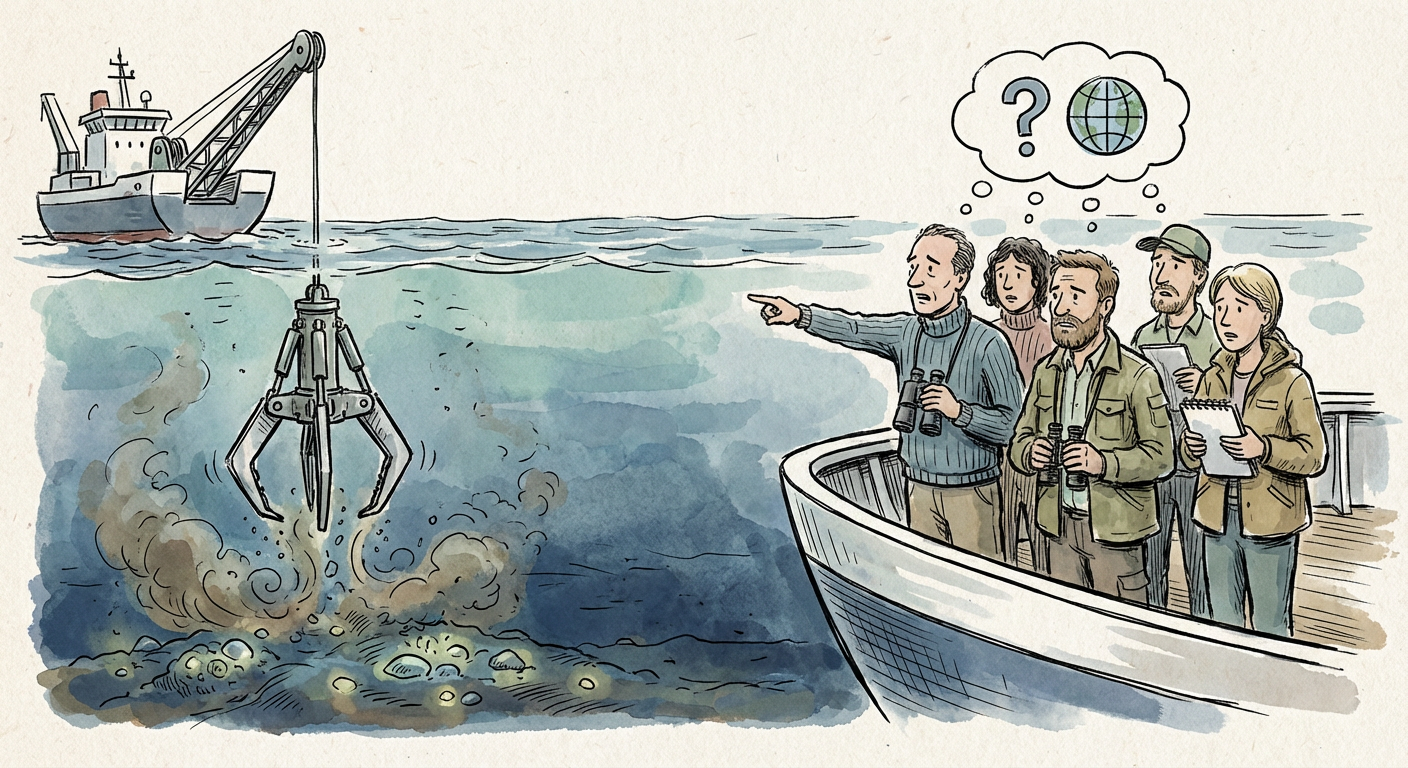
Simultaneously, deep-sea mining proposals are advancing through regulatory channels, raising alarm among marine biologists worldwide. The promise is straightforward: vast reserves of valuable minerals lie on the seafloor, and collecting them could help meet demand for materials needed in renewable energy and electronics. The catch is that mining would devastate ecosystems we’ve only just begun to understand. We’re essentially proposing to industrially harvest habitats before we’ve properly catalogued what lives there.
The plastic pollution data adds another layer of urgency. When autonomous vehicles documented synthetic debris in the Mariana Trench at depths exceeding eleven kilometers in surveys since 2019, it settled something unsettling into place. There’s nowhere left on Earth that hasn’t been touched by human activity. Not the deepest trench, not the most remote hydrothermal vent community. Our influence has become genuinely planetary.
Data, Institutions, and the Architecture of Discovery
Understanding how deep ocean research actually functions reveals why rapid progress is possible but fragile. Organizations like NOAA Ocean Service are crucial coordinating forces, establishing standards for data collection and making findings accessible to the global scientific community. The collaborative infrastructure matters enormously. A breakthrough in understanding deep-sea chemistry in one lab can inform conservation policy decisions on the other side of the world.
What strikes me most is how young this field still is in meaningful terms. The systematic exploration of the deep ocean as a coordinated scientific enterprise really began in earnest only in the past couple of decades. We’re not centuries into this the way we are with terrestrial biology or atmospheric physics. We’re in the opening chapters of understanding a world that comprises most of our planet’s volume. That simultaneously humbles and excites me. The fundamental discoveries haven’t all been made yet.
What Comes Next
I think about deep ocean research the way I imagine people thought about the early days of molecular biology or astronomy in the telescope era. We’re in a window where the tools for exploration suddenly work, where autonomous vehicles can operate cheaper and longer than human divers, where data transmission from impossible depths has become routine. But that window is also constrained by ecological urgency. We need to understand these systems deeply before they change fundamentally.
The overlap of discovery and threat creates an unusual moment. Marine biologists are racing to document and understand the deep ocean while simultaneously advocating fiercely for its protection. The work is celebratory and urgent at once, tinged with the awareness that every new species documented comes with implicit responsibility to preserve it. If you’re interested in how scientific institutions navigate these tensions, or if you want to follow the actual research as it happens, the resources from major marine research centers are increasingly accessible online. What questions are you curious about? What aspects of ocean science intrigue you most?