
The Reality Behind Rocket Science Romanticism
The commercial space industry has gotten really good at blowing things up in the most educational way possible. SpaceX’s Starship program is a perfect example. One day it’s carrying payloads to orbit like it’s no big deal, the next day it’s providing a spectacular fireworks show that would have killed any government program back in the day. What’s wild is that these explosive failures somehow lead to more funding, not less.
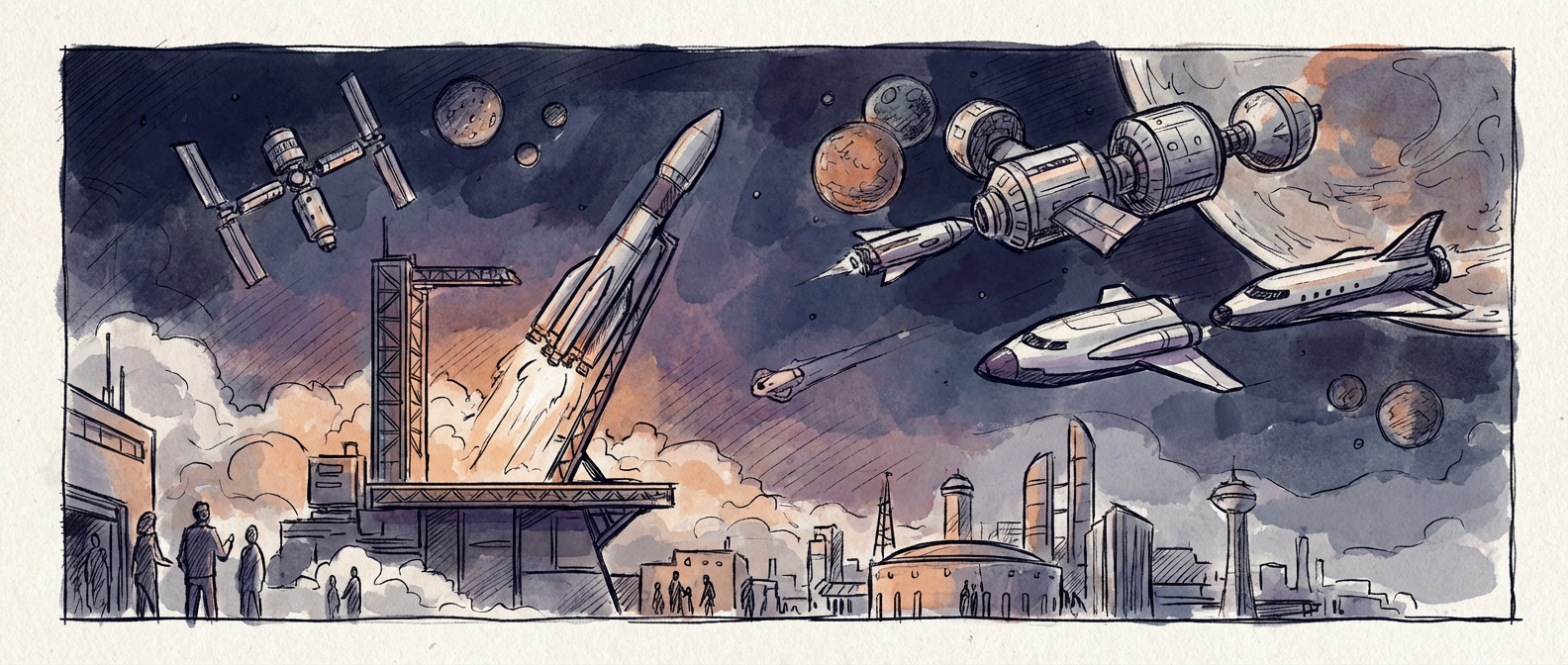
This whole “fail fast, fail often” mentality is completely different from how NASA operated for decades. Government space programs treated every failure like a career-ending disaster. Commercial companies treat explosions as expensive data points. Each time a rocket explodes, they learn things that no computer simulation can teach them. It’s a weird feedback loop where disasters actually speed up progress.
Here’s where it gets complicated: NASA’s Artemis program wants to put people back on the moon by the mid-to-late 2020s, and they’re depending on these same companies that regularly blow up their rockets. Traditional aerospace engineers must be having nightmares about acceptable failure rates. How do you plan a moon mission when your contractors consider explosions part of the design process?

Infrastructure Experiments in Low Earth Orbit
Companies like Axiom Space and Blue Origin have landed big NASA contracts to replace the International Space Station. Their timelines are ambitious, to put it nicely. These companies are basically saying “trust us, we’ll figure it out” when they’ve never actually built a space station before. They’re openly admitting they expect major design problems and operational failures along the way.
The economics get even messier. The ISS operated as a government research lab with basically unlimited funding when things went wrong. Commercial space stations need to turn a profit while keeping people alive in space. That’s a hell of a business model. They have to satisfy safety regulators who are still writing the rules as they go.
What’s interesting is how transparent everything has become. NASA news covers both the wins and the disasters in real time. Decades ago, these failures would have been classified. Now they’re press releases. Somehow, watching companies struggle publicly makes people more confident in them, not less. Maybe because it feels more honest than the old “everything is perfect” approach.
Regulatory Frameworks for Unproven Technologies
The United Nations is trying to write rules for asteroid mining. Let me repeat that: they’re creating laws for an industry that basically doesn’t exist yet, using technology that’s still mostly theoretical. The regulations assume that early asteroid mining operations will probably fail spectacularly. They’re not trying to prevent disasters, just manage them legally.
Space debris rules are more immediate and practical. With all these new satellite constellations, orbit is getting crowded fast. Collision risks go up exponentially with each new satellite launch. The regulations basically admit that accidents will happen. They’re focused on limiting the damage when satellites inevitably crash into each other.
Regulators are trying to encourage innovation while managing risks they don’t fully understand. Traditional regulation works when you know what usually goes wrong. Space commerce operates in territory where the failure patterns are still being discovered. Every new type of mission teaches us about problems we didn’t know existed.
Economic Projections and Market Reality
Industry analysts project the lunar economy could hit $170 billion by 2040. That’s based on companies that are still struggling to operate reliably in low Earth orbit, never mind the moon. These projections assume technological breakthroughs that may or may not happen. But investors keep writing checks based on these optimistic timelines.
Space News industry coverage shows a consistent pattern: announced launch dates get pushed back, costs go over budget, and technical problems take longer to solve than expected. In any other industry, this would signal serious trouble. In space commerce, it’s just Tuesday.
Most commercial space activities lose money right now. Early missions prove technical concepts while burning through cash. The business models depend on future cost reductions and market growth that might not happen. Companies are essentially betting that they can solve the economics later. Sometimes this works. Often it doesn’t.
Learning Through Controlled Catastrophe
Commercial spaceflight has flipped traditional engineering on its head. Instead of spending decades testing everything to death, companies build quickly, test in real conditions, and learn from the explosions. It’s faster, cheaper, and arguably more effective for certain types of development. But it requires a completely different mindset about what failure means.
The trick is telling the difference between useful learning failures and catastrophic breakdowns that kill people or destroy entire programs. Companies need sophisticated risk management that can handle very public disasters while maintaining investor confidence and regulatory approval. That’s not easy when your test flight becomes a viral explosion video.
This approach might work for other emerging technologies where traditional development is too slow or expensive. But it requires the right regulatory environment, economic incentives, and cultural acceptance of experimental setbacks. Not every industry can afford to learn through controlled catastrophe.
The space industry is teaching us how complex systems can evolve through iterative failure when the conditions are right. Whether this model applies beyond rockets and satellites remains to be seen. But watching companies normalize disaster as part of innovation offers lessons about how humans adapt to unprecedented technological challenges, even when those challenges occasionally explode.