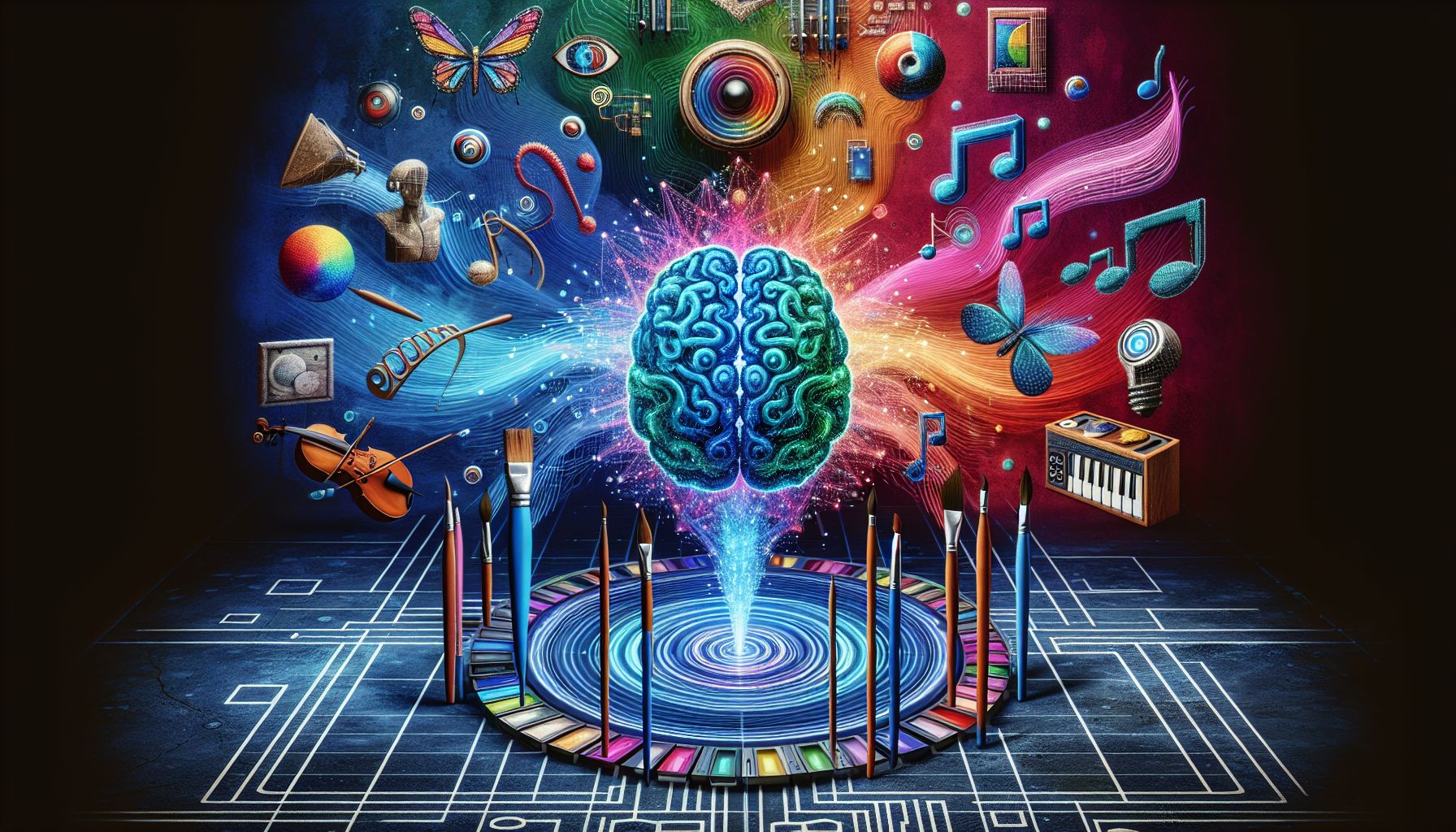

In just a few years, artificial intelligence went from sci-fi fantasy to something we use every day. We still don’t have flying cars, but AI might be changing the world faster than any technology in human history. I want to talk about something that really gets me excited: how AI is shaking up the creative arts. Let’s put aside the dystopian fears for now and look at what could actually be pretty amazing.
The New Age of Creative Disruption
Here’s the thing about creativity. We always thought it was uniquely human, something that came from our ability to connect random ideas and express things that are hard to put into words. But AI is turning out to be a surprisingly good creative partner. It’s making hyperrealistic art and composing music that wins awards. Honestly, it’s making me rethink what “creativity” even means.
Whether you’re an artist, run a business, code for a living, or just love watching how humans create stuff, this matters to you. AI art isn’t just changing creative industries. It’s inspiring a whole new generation of digital artists who work completely differently than anyone before them.
Algorithms with a Muse: How AI Creates Art
It starts with neural networks. These are complicated algorithms that try to copy how our brains learn and make connections. Generative Adversarial Networks, or GANs, are the real game-changers here. They make images you literally cannot tell apart from human-created art. That’s not hyperbole.
GANs work like this: two neural networks play a constant game against each other. One creates, the other judges. They keep pushing each other to get better, and the results get more sophisticated over time.
Take DeepArt or DALL-E. People with zero traditional art skills are making gallery-quality work with almost no effort. It’s like having a genie that turns every “what if” idea in your head into something visual. That’s where we are right now.
Breaking Traditional Barriers in Music Composition
AI isn’t just messing with visual art. It’s got music figured out too. Platforms like Amper Music, AIVA, and Sony’s Flow Machines can generate endless soundtracks that actually respect mood, genre, and rhythm in ways that make sense.
I don’t think AI composers mean doom for human musicians. What they’re doing is exploring musical territory we never could before. They let composers mix human intuition with algorithmic power. Sony’s AI can literally compose music in the style of dead masters. A Beethoven-AI collaboration sounds weird, but it’s totally possible now.
Empowering Writers and Storytellers
You might wonder how AI could handle the emotional subtlety and cultural context that good writing needs. I was skeptical too. But OpenAI’s GPT models are surprisingly sophisticated with language. They generate text that feels genuinely human, which makes them useful for journalists, authors, and content creators.
Tools like Jasper and Writesonic can help you write essays, craft stories, or bang out marketing copy faster than before. Writers can focus on the strategic and creative stuff while machines handle the repetitive tasks. AI isn’t replacing the pen with code. It’s giving writers a different kind of tool, one that runs on data and opens up creative possibilities we didn’t have before.
Democratizing Art Like Never Before
Here’s what I find most exciting about AI in art: it makes creativity accessible to everyone. Not just consuming art, but actually making it. Anyone with a smartphone can experiment with complex creative processes and produce real artwork using built-in AI features.
By lowering the barriers to entry, AI lets people around the world embrace art regardless of their background or bank account. The art world’s doors are getting thrown wide open, and everyone’s invited to explore.
But What About Authenticity and Ownership?
Of course, it’s not all sunshine and digital rainbows. People have legitimate concerns about authenticity and artistic integrity. When an algorithm helps create a painting, who actually owns the creative rights? The programmer? The user? The algorithm itself? These legal questions don’t have clear answers yet.
Then there’s the bigger philosophical question: does AI-produced art have the same value or emotional weight as human-made pieces? AI can copy styles all day long, but it doesn’t have emotions, life experiences, or existential dread. Those qualities seem pretty important to authentic creativity, at least to me.
Future gazing: What Lies Ahead?
So where does this leave us? I don’t see AI as the enemy of artists. It’s more like a really capable collaborator that can handle the grunt work, freeing up human creativity for the meaningful, nuanced stuff. The partnership between humans and AI still has tons of unexplored potential.
We’ll probably see more personalized art, almost like custom tailoring but for creative work. Think home decor that changes with your mood, art pieces that reflect current events, or movie soundtracks that evolve based on how the audience reacts. This isn’t science fiction anymore. We can actually do this stuff.
Conclusion: A Renaissance Amplified by Code
The merger of AI and creative arts isn’t about humans versus machines. It’s about humans working with machines. Whether we’re building algorithms that have artistic vision or composing music that bends time, AI is proving that creativity doesn’t have borders.
Welcome to a renaissance powered by code, where art meets algorithm and humanity remains the essential ingredient that makes it all matter. Keep your eyes open and stay curious. The digital canvas is waiting. With AI as our creative partner, this new artistic landscape isn’t just a cover band version of traditional arts. It’s something brighter, more complex, and completely its own thing. Who would have thought the future of human creativity would run on zeros and ones? But here we are, completely fascinated and undeniably inspired. I can’t wait to see what AI creates next.